S22 E1 - Are you ready to Respond in Critical Moments?
Make a difference when it matters most:
Save A Life!

Host:
Cary Hall, America’s Healthcare Advocate
S22 E1 - Are you ready to Respond in Critical Moments?
Make a difference when it matters most:
Save A Life!
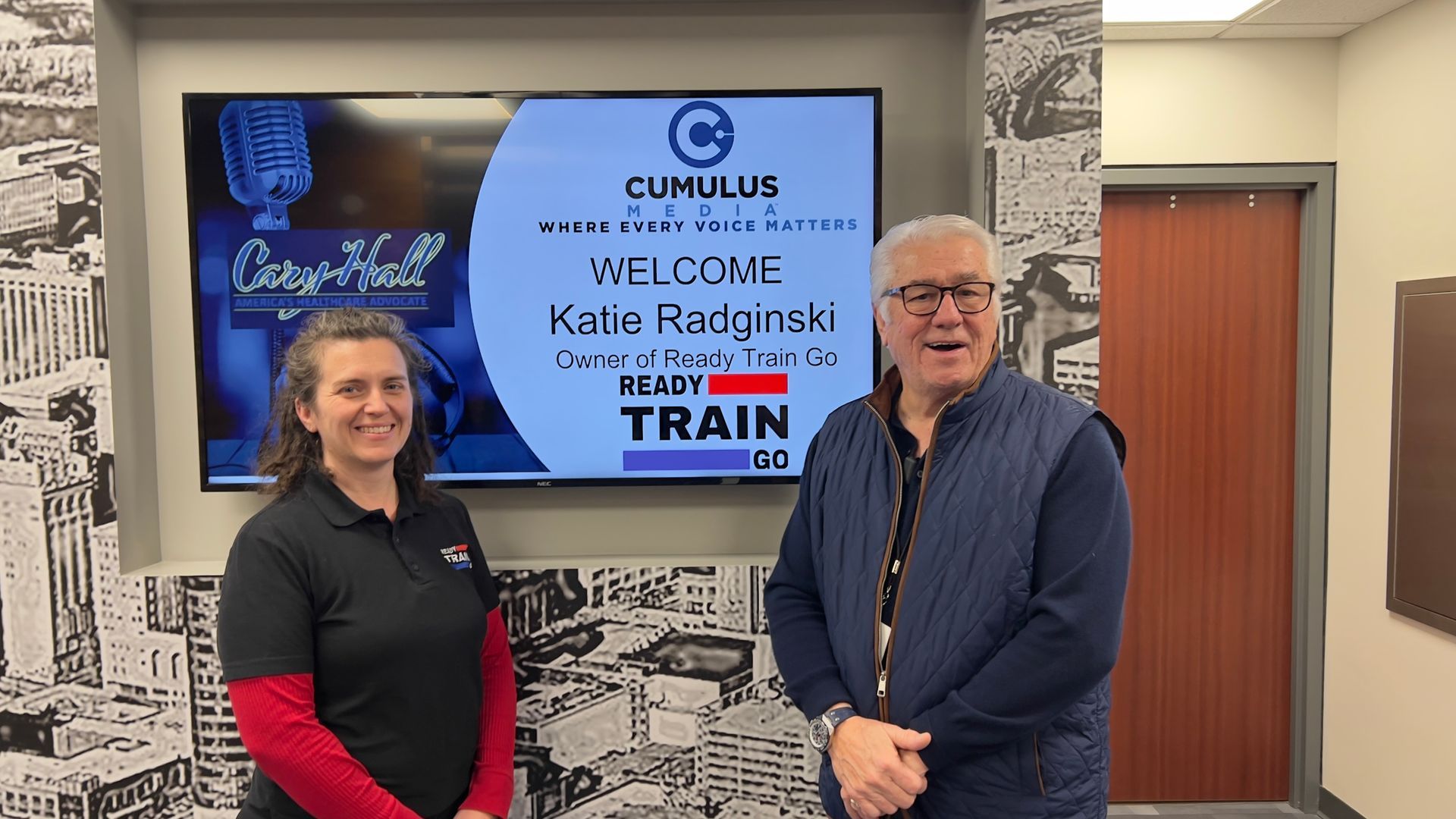
Katie Radginski founded Ready Train Go in 2020 after seeing a need for a higher quality of training for situational awareness and emergency preparedness. She brings her 20 years of experience and her empathy and compassion to her classroom and now to our show.
Learn how to Save A Life and the truth about the AED you see in offices and public places... what it can do and what it won't do.
This is Episode 1 of Season 22 of America's Healthcare Advocate, I'm Cary Hall.
Learn about Ready Train Go, call 636-439-8761 or visit https://readytraingo.com/
And if you need help or have something to share, contact me Cary Hall, America's Healthcare Advocate at https://www.americashealthcareadvocate.com/contact-us
And let me know what's on your mind, issues you are dealing with, or other health, healthcare, and health insurance questions and concerns.
Listen to this episode
Below are audio podcast players to stream from here on our website. or search for "America's Healthcare Advocate" on your favorite podcast platform.
Watch on Rumble:
Play full audio podcast (above) or find it by clicking from the list below:
iHeart
Episode 2201 Transcript
00;00;07;25 - 00;00;27;18
Cary Hall
Hello, I'm Cary Hall on today's show. Think about if you have ever seen someone go into cardiac arrest. What would you do? Would you know what to do? Would you know how to do it? Do you know how to do CPR? We have an expert in studio today. Her name is Katie Radginski. She is with ReadyTrainGo.com.
00;00;27;23 - 00;00;34;28
Cary Hall
And we're going to teach you why CPR is really important. Stay tuned. Listen and learn.
00;00;35;01 - 00;00;38;28
Announcer
And now America's Healthcare Advocate, Cary Hall.
00;00;39;06 - 00;00;52;22
Cary Hall
Hello, America. Welcome to America's Healthcare Advocate show, broadcasting coast to coast across the USA here on the HIA Radio Network. My producers today, Mr. Garner Cowdry behind the boards making all of this work on the Cumulus stations across the country.
00;00;52;26 - 00;01;13;19
Cary Hall
Dave Thiessen, behind the cameras, the man who posts all these shows up on our YouTube and podcast channels. You know, we have 16 podcast channels now, just to give you some idea. Spotify, Rumble, SoundCloud, iHeart radio, the list goes on. And obviously our YouTube channel, 608,000 people watching the shows on YouTube from time to time. We're pretty proud of that.
00;01;13;21 - 00;01;36;10
Cary Hall
Also, if you want to know more about us, go to the website AmericasHealthcareAdvocate.com AmericasHealthcareAdvocate.com. Send me an email. You've got questions. All the shows are posted there as well. We're happy to help you with anything if we can. If you are chronologically challenged, are looking for Medicare or looking for an Obamacare policy, call the lovely Carolee Steele at RPS
00;01;36;10 - 00;01;57;13
Cary Hall
Benefits by Design 877-385-2224. Also, you know, if you're a 1099 worker and you're looking for something more affordable than ACA, you might want to ask her about GigCare. That's a plan that could make a lot of sense for you. So you might want to go back and give those folks a call over at RPS Benefits by Design 877-385-2224.
00;01;57;20 - 00;02;18;09
Cary Hall
And on the Group side, you might want to talk to Maria Ahlers because she is offering products and showing products to employers across the country that are something different than what they're seeing from some of the carriers. So once again. 877-385-2224 if you want help anywhere in the country, RPS Benefits by Design. Joining me in studio today, Katie Radginski.
00;02;18;12 - 00;02;35;09
Cary Hall
And we're going to be talking today about CPR and other things to do with, critical care in terms of how do you deal with some of these emergencies. Most specifically. We're going to talk about CPR. Why is that important? What does it mean? What do you need to know if you want to get certified why should you bother?
00;02;35;12 - 00;02;44;00
Cary Hall
Why is it important okay. And where do you see incidents like this where this becomes a very important issue. So I'm going to tell a little story here before we get started. Welcome, Katie.
00;02;44;01 - 00;02;44;14
Katie Radginski
Thank you.
00;02;44;15 - 00;02;51;17
Cary Hall
Happy to have you here today. Came in here from Saint Louis today to do the show. We're very happy to have her. So my daughter works at Morgan Stanley.
00;02;51;17 - 00;03;19;11
Cary Hall
She is a financial analyst there. They're in a meeting, with one of their clients one day. And the gentleman's an older gentleman, like, I'm 76. I don't know if he was that old or older, but regardless of that he goes in to heart failure, has a heart attack. She is trained in CPR and certified. She goes into CPR, literally saves the guy's life by the time the paramedics get there and they tell her that. That story to me, Katie illustrates why you never know, right?
00;03;19;18 - 00;03;35;11
Cary Hall
Okay, so talk a little bit about this. Why... It's very interesting. In the show notes, I was going to this morning at about 430 in the morning. You had in here. If you're untrained, just call 911. And that really stuck out to me. Like, don't do more harm than you were. Good. So talk a bit about that, right?
00;03;35;11 - 00;03;52;12
Katie Radginski
I always tell people like the little voice in your head, like, listen to it because it'll say, call 911 and you're like, well, should I, should I not? Well now you just wasted thirty seconds of that person's possibility of, of being saved because you chose not to do anything. So doing something is that first step. And then once you call 911, they'll walk you through it.
00;03;52;12 - 00;04;09;03
Katie Radginski
And you don't have to be afraid of actually knowing what to do, even though getting certified is helpful because it gives you the confidence. Like anything, if you don't use it, you're going to lose it. Like I use the example usually, like I don't want an airplane pilot not knowing what they're doing when we take off.
00;04;09;07 - 00;04;10;04
Cary Hall
Probably not.
00;04;10;06 - 00;04;27;25
Katie Radginski
No. Like they have to have continuing education units, just like you should go to a class and get certified in CPR and first aid so that you understand the skills, because you going through one time isn't going to make you knowledgeable of everything. And you don't have to feel that, intimidation when when you're taking the class, I'm like, oh no, now I have to save everybody.
00;04;27;26 - 00;04;37;20
Katie Radginski
No, do what you can. You know, if that means you're calling 911 and then the paramedics come and take over, then you've done what you can do. But like with your daughter, she jumped in and she started CPR and saved the life.
00;04;37;20 - 00;04;54;09
Cary Hall
And I had no idea she even knew how to do that. And so my dad, Morgan Stanley, put as a program in place. We get trained if we want to volunteer. And she she started out in California doing it. Now she's kind of like the person in their facility here in Leawood who, you know, trains other people and knows how to and does this.
00;04;54;14 - 00;04;55;18
Cary Hall
It's really kind of amazing.
00;04;55;24 - 00;05;05;14
Katie Radginski
Right. And you never know what companies do that. Like a lot of companies in the area, even though like you said, it's Morgan Stanley is not one that you think like, oh, they're not medical providers. Like, well, why would they have CPR?
00;05;05;15 - 00;05;06;19
Cary Hall
They're financial planners.
00;05;06;25 - 00;05;24;10
Katie Radginski
Right. But there are tons of organizations that will do that, like car rental places, manufacturing companies like different places that you're going like, oh, okay. And they have safety teams because it's the just in case if something were to happen, you never know when emergencies can happen that they're they can step up and actually help their coworkers.
00;05;24;12 - 00;05;45;28
Cary Hall
So what what is the difference between CPR. And then when you see the mouth to mouth thing, I never really quite understood the difference between the two. One looks like it's relatively easy do whether or not I want to put my mouth over somebody else's mouth. I'm not so sure about that. So talk a little bit about what's the difference between those two and why one versus the other.
00;05;45;28 - 00;06;02;25
Katie Radginski
Well so here let's break it down for us. So CPR is cardiopulmonary resuscitation. So cardio is heart pulmonary is lungs. Resuscitation is bring back to life. So we need our heart to pump. So it when our heart pumps it goes. Ba dmp, ba dmp, ba dmp. It needs to have this rhythm. And it has electrical impulses that there's still the body.
00;06;02;28 - 00;06;23;07
Katie Radginski
It's complicated in order. When you do CPR and you're doing the the compressions part, you're pumping the heart for the heart when it just stops. When we do the breaths, it gives us the oxygen that the blood needs to circulate to the brain and the other vital organs. Because if you don't have oxygen to your brain, you won't be able to function as a person.
00;06;23;09 - 00;06;39;24
Katie Radginski
And so you put the combination of the two together. And that's what CPR is compressions and breaths. Now people will debate back and forth. Well, you don't need to do the breaths anymore because like you said, I don't want to put my mouth on someone. Well, they have devices that that's a breathing barrier that has a one way valve that lets the air go in.
00;06;39;24 - 00;06;48;01
Katie Radginski
And it doesn't let their vomit, their saliva, their goobers come up into your mouth. If they were to happen to puke during this process, which is.
00;06;48;04 - 00;06;48;28
Cary Hall
It does happen.
00;06;49;01 - 00;07;08;26
Katie Radginski
Unfortunately, that's a thing that will happen. But the thing is that's, that's an okay thing. But on the flip side, is like, people still need the oxygen, but if you can't do anything, do compressions, because it gets the heart reminding itself to go, hey, I have to actually pump. We gotta work. Because if I don't pump again, my blood's not going to get to the brain in the other vital organs.
00;07;09;02 - 00;07;23;01
Katie Radginski
So it's it's a both. If you don't know what to do, you could just start compressions and then do it at a beat of 100 or 120 beats per minute. So, like, think, Another One Bites the Dust if you're in a morbid feeling or another or, Stayin Alive or like.
00;07;23;01 - 00;07;24;20
Cary Hall
Okay, I, I could do Stayin Alive.
00;07;24;21 - 00;07;25;06
Katie Radginski
Baby Shark.
00;07;25;08 - 00;07;31;10
Cary Hall
that means that I do think, not the dance. Okay, but I can certainly do this. All right.
00;07;31;14 - 00;07;34;11
Katie Radginski
But just to get that rhythm in your head, and you just go and.
00;07;34;13 - 00;07;38;14
Cary Hall
120 beats. So how many compressions is that per minute then?
00;07;38;19 - 00;07;43;12
Katie Radginski
So that's about, make me do math this morning.
00;07;43;14 - 00;07;43;29
Cary Hall
No. I'm sorry.
00;07;43;29 - 00;07;47;06
Katie Radginski
No, 101 hundred, 120 beats per minute.
00;07;47;07 - 00;07;47;20
Cary Hall
Right.
00;07;47;20 - 00;07;54;18
Katie Radginski
So 30 compressions would be about 18 to 20s per 30 compressions. Okay, there you go. The math part.
00;07;54;20 - 00;08;11;22
Cary Hall
I put her on the spot. I didn't intend to do that. How do you know whether to do just the compressions or to go to mouth to mouth? I mean, how do you know which one? I in fact, it's funny because I did not ask Andrea if she did mouth to mouth or just did compression, but how do you know which one to do?
00;08;11;22 - 00;08;16;02
Cary Hall
How how in that moment, how do you know, which one to do?
00;08;16;07 - 00;08;22;06
Katie Radginski
So if you're if your heart is not pumping, you won't get the oxygen to the brain. So you have to start with compressions.
00;08;22;06 - 00;08;24;22
Cary Hall
Okay. So so you start with compressions at.
00;08;24;22 - 00;08;45;05
Katie Radginski
The basic, most basic level of training I would say just start with compressions like higher levels of training. There's other reasons why you would start with other things. But just to keep it simple, start with compressions. Your body has about 5 to 7 minutes worth of oxygen in it anyways. So usually just compression only CPR is going to give that person a better chance of survival than not doing anything at all.
00;08;45;07 - 00;09;02;19
Katie Radginski
Because when the blood stops flowing after three minutes, you get brain damage to the brain and after ten minutes it's irreversible. Now there's always exceptions. There's always miracles that happen, you know? But statistically speaking, after three minutes of no oxygen to the brain, that person is going to start having cells die. So it's important that we start doing something.
00;09;02;19 - 00;09;07;22
Katie Radginski
So call 911, start the compressions and then just go hard and fast. Keep going.
00;09;07;24 - 00;09;18;05
Cary Hall
And but you said it so you're on the phone with 911, you go “but I don't know how to do CPR”. Can you walk me through this. And they will literally tell you start the compressions now, do ‘X’ number.
00;09;18;05 - 00;09;31;06
Katie Radginski
And so so they'll tell you put your hand in the center of their chest. I usually tell people, take your middle finger, find the armpit line, and then just place the center of your hand in the sternum, place it over top or hold your other hand. Put your arm straight and just push.
00;09;31;08 - 00;09;46;27
Cary Hall
And that's it. That's it. It's pretty simple. So you do you do this continuously or do you do you know, the prescribed number in that in that one minute or whatever it is, period. And then stop and then start again or you just keep going nonstop.
00;09;47;00 - 00;09;54;02
Katie Radginski
So it depends on your training, if you've had training and if you understand the rhythm there's 30 compressions and then two breaths okay.
00;09;54;02 - 00;09;56;17
Cary Hall
So 30 take two breast and start over again.
00;09;56;21 - 00;09;57;25
Katie Radginski
And when you're breathing it's.
00;09;57;27 - 00;10;09;05
Cary Hall
Pretty rigorous I'm setting here thinking about that. If I've got to do 30 those I got two breaths I go right back at it again. Yeah. And you're waiting 8 to 10, 15 minutes to get an ambulance there.
00;10;09;06 - 00;10;11;11
Katie Radginski
That's why it's important to have more than one person trained.
00;10;11;11 - 00;10;11;27
Cary Hall
Oh.
00;10;11;27 - 00;10;32;27
Katie Radginski
So every two minutes you switch. And then here's the extra bonus information. If you have an AED, use that because that's going to help someone who's in true cardiac arrest. The AED will reset the heart so that that person can have a best chance of survival. Statistically speaking, you will have 70 to 80% chance of survival if you throw that AED in the mix versus just CPR.
00;10;32;29 - 00;10;46;10
Cary Hall
Okay, when we come back from the break, I'm going to talk about that AED, because one of the things that I as I was going through the notes for the show this morning was thinking about was, wait a minute, you mean I got to grab those paddles and go shock somebody? I mean, you see it all the time on television.
00;10;46;10 - 00;11;05;14
Cary Hall
You're like, I'm not so sure I want to do that. So when we come back, I want you to talk about what is that like? What's the risk there if you don't do it right, how do you do it right? And there's obviously training for that. And it's really funny because, you'll see a lot of businesses now have those on the wall right in their business.
00;11;05;14 - 00;11;19;17
Cary Hall
So they're there. But you have to know what you're doing before you use it. All right. When we come back to the break. We're going to talk with Katie about the AED. How do you use those paddles? How do you know if it's right or wrong, whatever the case may be. But if you want information, her company is called Ready Train Go.
00;11;19;21 - 00;11;46;07
Cary Hall
They train people all over the country. This is what they do. They do a lot more, which we'll talk about in some of the upcoming segments. But you want to reach out to her 636-439-8761 or ReadyTrainGo.com ReadyTrainGo.com. Stay tuned. We'll be right back after the break. You're listening to America's Healthcare Advocate Broadcasting here on the HIA Radio Network.
00;11;46;14 - 00;12;00;05
Cary Hall
Coast to coast Cross, USA. Don't go anywhere.
00;12;00;07 - 00;12;20;21
Cary Hall
Welcome back. You're listening to America's Healthcare Advocate broadcasting coast to coast across USA here on the HIA Radio Network. You can find out more about us by going to the website AmericasHealthcareAdvocate.com. All the shows are on the podcast platforms and on our YouTube platform in the studio with me, Katie Radginski. She is the founder of Ready Train Go.
00;12;20;21 - 00;12;42;05
Cary Hall
What are we talking about? We're talking about CPR. And in this segment we're going to talk about AEDs. So those of you watching this, obviously you're going to be able to see this. Those of you listening to us on the radio, the podcast can't see it. Sitting in front of me is a lime green AED, automatic. Explain this thing will you, because it looks very sophisticated and complicated to me.
00;12;42;09 - 00;12;48;19
Katie Radginski
So it's like it's the shock machine. That's what people, they call it, and they're scared of it. But I don't want you to be scared of it because it's only going to.
00;12;48;19 - 00;12;50;18
Cary Hall
Long as you don't use it on me. Katie. I'm good.
00;12;50;18 - 00;13;12;25
Katie Radginski
I can't, so that's the beauty of it, I can't. So the AED is actually only going to read, two different types of, of rhythm. So ventricular fibrillation, ventricular tachycardia. So that's fancy for the heart spazzes out in two special rhythms. One is where the heart kind of goes into, I guess spastic mode, where it just kind of like that kind of a rhythm for those who are just listening.
00;13;12;25 - 00;13;28;02
Katie Radginski
And then the other one, it's just going from top to bottom, electrical impulses going up and down. It's not actually hitting where it needs to hit in the heart. Okay. So when you have the electrical impulses, it goes, but when it gets out of whack, it goes in those two weird rhythms where the blood can't circulate to the brain on the other vital organs.
00;13;28;03 - 00;13;39;03
Katie Radginski
The AED comes along and it shocks the heart. It stops it, and then the heart will, will spontaneously restart. It's not actually giving you a jump start like jumper cables, okay?
00;13;39;03 - 00;13;40;23
Cary Hall
Because that's what I always thought it did.
00;13;40;23 - 00;13;59;28
Katie Radginski
Nope. It's stopping the heart. Now, if we had a victim that we put the AED on and it said, okay, we have a shockable rhythm, then it will say, will administer the shock. Now if you touch the victim who had the pads on it while I press the shock button, then yes, you die too. But when you can't, you can't do that unless someone here is in cardiac arrest.
00;14;00;07 - 00;14;05;23
Katie Radginski
Now, if the person is in what's called asystole, we're going, like on the movies. You see them going, oh, quick, quickly.
00;14;05;23 - 00;14;06;18
Cary Hall
Flatline?
00;14;06;19 - 00;14;07;03
Katie Radginski
Flatline.
00;14;07;03 - 00;14;08;08
Cary Hall
Okay, that's not real.
00;14;08;10 - 00;14;26;25
Katie Radginski
Because this AED will not. Read. That's not a shockable rhythm. You can't stop something that's already stopped. Okay. And so that's why it's super important that you understand, you can't make things worse and excuse me, they're already dead, so I can't make them more dead by stopping the heart to make the heart not stop.
00;14;26;26 - 00;14;29;16
Cary Hall
And that won't bring them back.
00;14;29;19 - 00;14;31;27
Katie Radginski
Not if they're they're flatlined now. Correct. Right.
00;14;31;27 - 00;14;35;09
Cary Hall
So then now we're back to compressions and mouth to mouth.
00;14;35;10 - 00;14;37;29
Katie Radginski
Correct. So the heart now our CPR.
00;14;37;29 - 00;14;45;23
Cary Hall
That's a remarkable clarification because I always thought you watch television shows, guys. They show the flatline. That's the first thing they show. That's baloney.
00;14;45;23 - 00;15;06;12
Katie Radginski
It is. And so it's like a glorified stuff of like, now with medical intervention, with other methodologies. Yes. You can bring someone back from what they call asystole. Not always, but it's just sometimes just not with this machine. So this one, again, is foolproof. The person goes down, you're you're cutting the steps. Basically, you turn it on.
00;15;06;14 - 00;15;21;21
Katie Radginski
The hardest part of the whole thing is turn it on. It will start talking. It will like it will beep. It will say in a very commanding voice like, stand clear and it'll say, remove patients clothing. So you remove the clothes with scissors. So like this has scissors in it. These will cut through a penny. They're that strong.
00;15;21;21 - 00;15;34;08
Katie Radginski
It will cut through the shirt you cut through. If it's a woman you cut down their bra. Because yes, it has a underwire in it. You don't want to have electrical burns on that person. So. Okay, cut straight down. The person will get new clothes. It'll be okay.
00;15;34;08 - 00;15;36;29
Katie Radginski
Like, I don't want to ruin this expensive shirt.
00;15;37;01 - 00;15;49;25
Katie Radginski
No, no. Like cut it off. And then you're placing the pads, one on the top right between the collarbone and the, the nipple line. So top upper right and then lower part of the sternum below the armpit about two inches. Avoid the breast tissue
00;15;49;25 - 00;15;57;29
Cary Hall
So it's not like they show on television. You guys you watch they're putting a right here on the chest. That's not how you do it.
00;15;58;00 - 00;16;11;14
Katie Radginski
No not for this type of machine. Right. So it's top upper right lower left because it wants the electrical impulse to go through that heart. Now if you have a child and you'll see pictures on the AED they actually have pictures on the actual pads.
00;16;11;17 - 00;16;11;28
Cary Hall
Okay.
00;16;11;28 - 00;16;27;16
Katie Radginski
Where it's here and here. Now the Zoll brand, they have a, responsive feedback device. Some people call it a brick. It's just an extra pad that goes in the middle. This tells you where your hand goes, and then it also sometimes will speed you up or slow you down on your compressions. So you put the pads on.
00;16;27;16 - 00;16;43;11
Katie Radginski
It says stand clear analyzing. If it says shock advised, then you'll press the shock button and it will light up. You'll press the shock button, person will get shocked, and then either they'll come back to life or they won't. If they don't come back to life, then our job is to do the CPR.
00;16;43;11 - 00;16;44;10
Cary Hall
Back to CPR.
00;16;44;10 - 00;16;47;01
Katie Radginski
We’re going, okay heart, remember, you're supposed to beat. You're supposed to go.
00;16;47;03 - 00;16;51;10
Cary Hall
So this is a big green box. What's inside of there? The pads.
00;16;51;13 - 00;16;53;02
Katie Radginski
No, the pads are right here.
00;16;53;04 - 00;16;56;28
Cary Hall
Just. Okay. What do those pads look like? Because that's not what I'm. That's not what I envision.
00;16;57;04 - 00;17;21;13
Katie Radginski
So the pads. So think about when you go to the hospital and you get your heart read like the the EEG, the EKGs Yeah, yeah, yeah. They're giant sticker pads. Maybe like 2 or 3in. Right. And they're super sticky. So they'll go on top and then people will ask, well, what happens if they have chest hair? Well, if you cut down the clothes and you bare the chest and it looks like Chewbacca, then you probably need to take the razor that's in here because there's a razor inside.
00;17;21;18 - 00;17;28;09
Katie Radginski
And then you do a quick shave job. It's not going to be pretty. Don't worry about razor burn. Just kind of shave it, shave it real quick and then stick it on.
00;17;28;11 - 00;17;29;15
Cary Hall
Wow.
00;17;29;17 - 00;17;44;06
Katie Radginski
And you just go from there. So, like here and here, press the shock button. After you start the CPR, let's say that it doesn't work. They don't come back, start CPR. After two minutes, the AED will reanalyze it again because it'll say, okay, did the heart catch on to this rhythm it's supposed to be doing?
00;17;44;06 - 00;17;50;26
Cary Hall
How does it do that? Is that is that do you attach it? It reads what's actually going in the body to those pads.
00;17;50;27 - 00;18;01;02
Katie Radginski
It does. There's electrical wires inside the pads. Got it. So it's like stickiness pads. Wires goes into here. And then the magicalness happens I don't know the technical.
00;18;01;09 - 00;18;02;27
Katie Radginski
Electricity part of it.
00;18;02;27 - 00;18;11;25
Katie Radginski
But it happens. Also this button here that if the person needs, if it's, if it's a person who is 55 pounds and.
00;18;11;27 - 00;18;13;06
Cary Hall
Morbidly obese.
00;18;13;09 - 00;18;14;15
Katie Radginski
No, no, 55 pounds.
00;18;14;16 - 00;18;15;10
Cary Hall
Oh 55.
00;18;15;14 - 00;18;26;01
Katie Radginski
Not kilograms, but okay, 55 pounds. So like eight years or older then they would need to have pads. Adult size pads if they're less than 55 pounds, if they're eight years old or younger.
00;18;26;01 - 00;18;27;19
Cary Hall
So two year old, three year old.
00;18;27;19 - 00;18;32;02
Katie Radginski
Right. Then you would use pediatric pads. Now it will dial down the amount of energy that it gets.
00;18;32;02 - 00;18;34;03
Cary Hall
That there are pediatric pads in there, not.
00;18;34;03 - 00;18;34;19
Katie Radginski
In this one though.
00;18;34;20 - 00;18;35;25
Cary Hall
Okay. How interesting.
00;18;35;26 - 00;18;55;14
Katie Radginski
So this one looks like there's a button that you press that says whether it's a pediatric one or not. So this one will dial down the joules electrical impulses sent so that, it won't get as much energy. Now, let's say you forget to press the button. It's okay. You can still use the adults energy on the child, because the body knows what to do with the extra electricity.
00;18;55;16 - 00;19;16;07
Katie Radginski
It will just go out like. Yes, minor detail. You might have, internal burns on the heart, but the body will heal itself. That's, again, the great thing about, about how our bodies are made. So you place the pads. So if it's a child, let's say two year old, their body is probably going to be not, you're going to be too small to have the pads in the traditional placement.
00;19;16;11 - 00;19;19;18
Katie Radginski
So you'd put one on the front and then one on the back. And there are pictures.
00;19;19;22 - 00;19;21;29
Cary Hall
That there's a picture that shows because they.
00;19;21;29 - 00;19;39;21
Katie Radginski
Saw in the front one, back. Right. And that way it goes through the heart in that, that specific way. So same with an infant. You can use these on infants as well. If a child goes into cardiac arrest and you don't know, then you could place it on there. This is going to be what's going to save someone's life if they go into cardiac arrest.
00;19;39;24 - 00;19;45;26
Katie Radginski
And really, you can't mess it up. Like I said, the one thing is you turn it on and listen to the instructions and that.
00;19;45;29 - 00;19;47;10
Cary Hall
And it tells you what to do.
00;19;47;10 - 00;19;48;09
Katie Radginski
Absolutely.
00;19;48;12 - 00;20;02;17
Cary Hall
So that's that. That is absolutely so so it's not again, we're going back to what we see on television. It's not the two pads on the wall. And you grab them and you and you put the two pads on them because they're quote unquote flat lighting. If they flatline, you're not even using us. Right?
00;20;02;18 - 00;20;19;24
Katie Radginski
Well, and we're not in a hospital setting either. In a hospital setting. They have the paddles. So those paddles exist, but they look in different shapes and sizes, and they actually have a dial on them that tells you, what joules or what weight the person is. So the doctors and the nurses on the techs can actually figure out how much energy that person needs.
00;20;19;24 - 00;20;24;13
Katie Radginski
This is just general for anybody, to be able to use. And so it's like.
00;20;24;15 - 00;20;28;27
Cary Hall
So when you train people on CPR, do you automatically train them on how to use the AED?
00;20;29;03 - 00;20;31;06
Katie Radginski
I do, yes. Okay. Super important.
00;20;31;08 - 00;20;51;26
Cary Hall
Yeah. Obviously I mean that's intimidating to look at that thing and not now once you've explained it, that makes it sound like it's not all that difficult to do. And then your point, you push the button on the box and the box tells you what to do. Right. So it's going to tell you open the case, get the get the pads out, put the pads on, yada yada yada.
00;20;51;26 - 00;20;54;18
Cary Hall
Do all of that. Okay. How interesting.
00;20;54;18 - 00;21;10;26
Katie Radginski
So I challenge our listeners today that when when they go to the store, the next time, go look for the AED. Just look at it. It's not that scary. I mean, it's got two buttons on and shock and then it has the pads. So like look and you'll be surprised at how many you actually see in your area.
00;21;10;29 - 00;21;29;02
Cary Hall
It's remarkable. You know, you don't know what you don't know. All right. And this is great to have Katie here today. I had no idea about any of this. Right. So to me this is fascinating. It’s gets great education. It's a great opportunity. You've got a business or whatever the case may be, and you don't have this in place.
00;21;29;09 - 00;21;54;15
Cary Hall
This is probably something you should think about. You might want to give her a call. 636-439-8761. ReadyTrainGo.com is the website. ReadyTrainGo.com. She can help you anywhere in the country. Lady knows what she's talking about. Stay tuned. We'll be right back after the break. You're listening to America's Healthcare Advocate broadcasting here on the HIA Radio Network.
00;21;54;21 - 00;22;10;29
Cary Hall
Once again, that website you want to learn more about what Katie does. ReadyTrainGo.com.
00;22;11;02 - 00;22;34;02
Cary Hall
Welcome back. You're listening to America's Healthcare Advocate show, broadcasting coast to coast across USA here on the HIA Radio Network. I want to say hello to all of our stations out in Cape Girardeau, Missouri, KAPE 1550-AM, 100.3-FM and 95.7-FM. That's why I said all. They've got three radio stations there. We're on there on Saturdays and Sundays.
00;22;34;08 - 00;22;52;12
Cary Hall
Here's a little piece of trivia. You don't know the most famous talk radio show host in the world actually started out on KAPE. That would be Rush Limbaugh. So I've had the privilege of broadcasting in that studio. Great people down there. We're very happy to be on in Cape Girardeau, Paducah, Kentucky, that's the broadcast area they broadcast in.
00;22;52;12 - 00;23;08;13
Cary Hall
And we want to thank them for keeping us on the air. In studio with me today. Katie Radginski. And we're talking about her company, Ready Train Go. We're learning a lot today. There's a lot here I didn't know. First question I want to ask before we introduce the audience to Manuel, we'll get to him in a minute.
00;23;08;15 - 00;23;22;16
Cary Hall
He's the silent guest, by the way, for those of you listening on radio, is how hard when people are when you're doing these compressions, Katie, how hard do you push and should be worried about, oh, I might break a rib or I might talk to me about how that works.
00;23;22;16 - 00;23;40;08
Katie Radginski
So you want to press down at least two inches. So people will debate, like how much body mass you have to have to actually press down on somebody that hard. And it all depends on the person. You know. Are they, are they physically fit? Are they not. Can they are they coordinated. Are they not. But two inches. Is that the maximum depth that you really want to push for an adult.
00;23;40;10 - 00;23;56;08
Katie Radginski
And so and to answer the question about like the, will I break a rib, you might and that's okay because think about it. You're doing the exact opposite thing that the body's made to do. The ribs are made to protect the heart and the other vital organs. And so if you're pushing on the ribs, of course something's going to give.
00;23;56;10 - 00;24;04;26
Katie Radginski
You're probably going to separate some cartilage. You might crack a rib. You might just, make a giant, nasty bruise on the person, and yet the body will heal.
00;24;04;27 - 00;24;06;10
Cary Hall
But they're alive. They're alive.
00;24;06;12 - 00;24;19;11
Katie Radginski
Right. Again, like I said earlier, you can't make it worse than it already is. Like, if they're dead, you helping them to have their heart pump the blood to the brain and the other vital organs. It can't do anything that's worse.
00;24;19;12 - 00;24;30;19
Cary Hall
So I'm going to guess that if you've got somebody that's a 250 pound, 300 pound male, and you're trying to do this, you're going to be pushing a lot harder than your 124 pound woman.
00;24;30;26 - 00;24;31;14
Katie Radginski
Absolutely.
00;24;31;14 - 00;24;32;00
Cary Hall
So, okay, the.
00;24;32;00 - 00;24;49;19
Katie Radginski
First couple of compressions are going to be the hardest. And once again, once it kind of gives a little that means it'll separate. Then you'll be able to, do more compressions. Now, if you are working with someone who is 300, 300 plus pounds, you’ve got to call 911, and you have to tell them, hey, this is someone who's larger.
00;24;49;23 - 00;25;00;03
Katie Radginski
You might need a bariatric gurney. You might need they have machines. I forget the name of the machine, but it looks like a spider. And it actually manually does the compressions around that person.
00;25;00;05 - 00;25;00;26
Cary Hall
Holy cow.
00;25;00;26 - 00;25;09;02
Katie Radginski
Right. It's it's kind of scary looking because it's intense. It's like they hook the person up. It looks like spider fingers that go around the the chest, and it just: domp, domp, domp.
00;25;09;03 - 00;25;25;03
Katie Radginski
And it just keeps going. So like that helps the paramedics whenever they come. Especially if it's someone of larger stature because they're not going to be able to sustain that. Like I said, every two minutes you should be switching out. Otherwise you're going to be basically doing sloppy CPR and not helping that person have a chance of survival.
00;25;25;06 - 00;25;38;08
Katie Radginski
I tend to think about like, if you're going to, have you ever exercised before, and you go on an elliptical, so like the elliptical. Has those things that go back and forth like the last 30s of your, your stint that you've done and you're like, I'll just do it for 30 more seconds. Well, you've already pushed past your limit.
00;25;38;08 - 00;25;55;18
Katie Radginski
Now you're just blop in your head back and forth and have on your arms, and you're letting the machine do the work for you. That's sloppy CPR at its finest. That's an example of that. You're not actually doing anything for your body by staying on an elliptical. The extra 30s just flopping and hanging on. So it's like change out before you get to that point of exhaustion.
00;25;55;20 - 00;26;06;24
Cary Hall
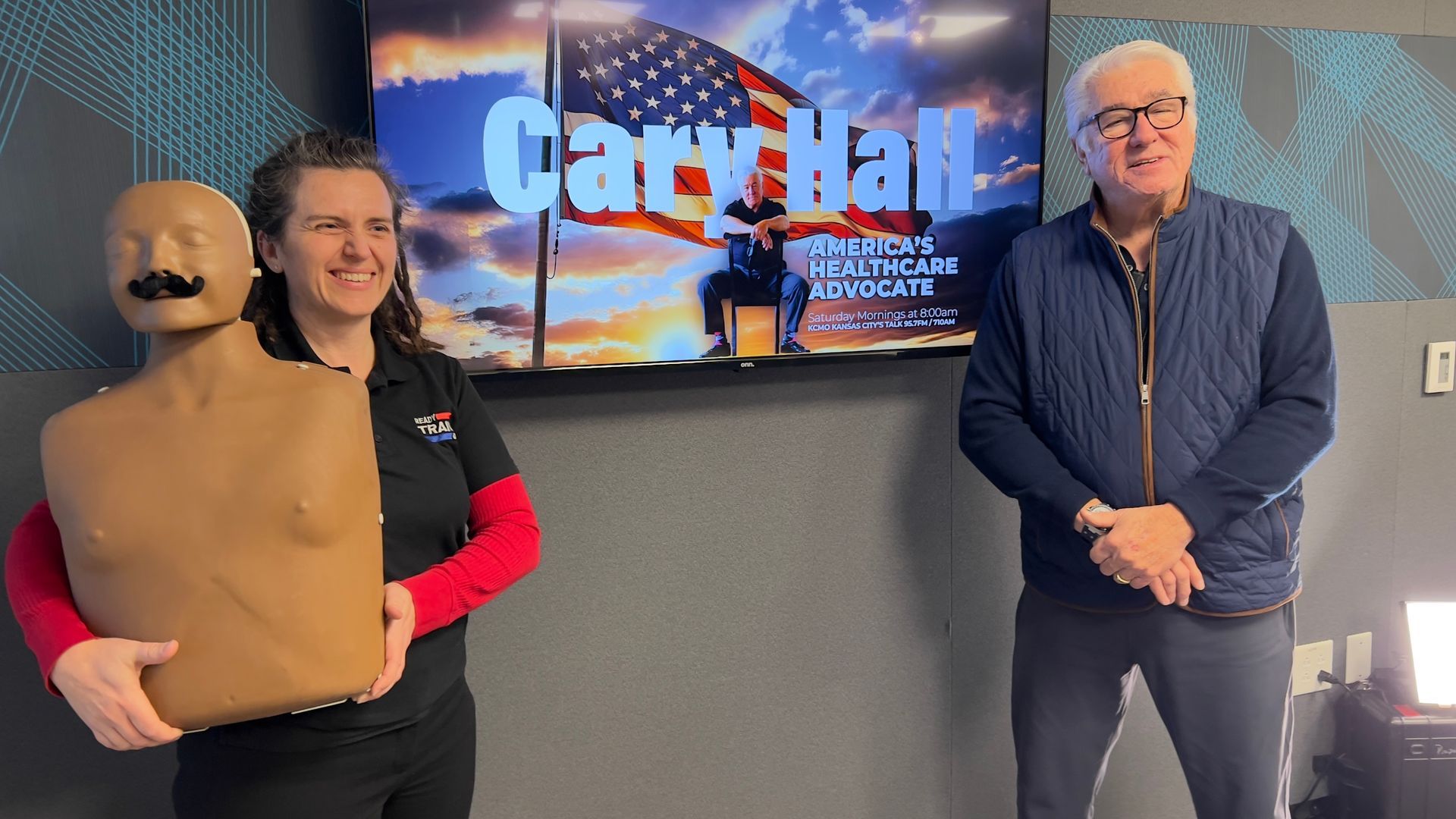
Interesting. All right. Let's introduce Manuel, he's sitting over here for those of you that are, listening on radio, you can't see Manuel, but he has a mustache. And what is man world's function? Katie.
00;26;06;26 - 00;26;27;22
Katie Radginski
So today he's my advertising director. He's coming here just to market with me. But in all seriousness, though, he's an example of one of the mannequins that we use. He is, a CPR mannequin. So he has, a chest. He has a torso. This mannequin today has a mustache on just for grins. But when we teach classes, we don't put mustaches on because you have to sanitize the faces.
00;26;27;22 - 00;26;29;02
Katie Radginski
And that would be gross to have to.
00;26;29;04 - 00;26;30;03
Cary Hall
Okay. All right.
00;26;30;05 - 00;26;48;09
Katie Radginski
But, with him, this is how we teach people how to do the compressions and the CPR. So he's got an anatomical sort of anatomically correct chest where he has a chest, a nipple line. Although everybody won’t look like this when you bare the the chest, the skin moves weird and everything will be everywhere else.
00;26;48;09 - 00;26;58;12
Katie Radginski
But most, people have armpits. When you find the armpit line, you take your middle finger and you find the center. So think about to the nose like your nose down, and then your armpit line kind of trace an “L”.
00;26;58;15 - 00;26;59;13
Cary Hall
Like a cross.
00;26;59;16 - 00;27;16;27
Katie Radginski
And your hand just goes right in the center and then you'll go straight down. Now Manuel has a feature where he clicks. When you hit two inches, he'll click and he'll tell you, hey, that's deep enough. And that way, you know, when we practice, we auditorial hear it. Some versions of mannequins will have lights that light up. I have a different version.
00;27;16;29 - 00;27;31;17
Katie Radginski
I call her Annie, so she's a cue CPR mannequin where she has a cord that comes out of her and tells you how fast you're going, what your depth is, and then if your breaths actually went in. So when we do the breaths on the mannequin, we pinch the nose. Depends on the breathing barrier I'm getting way into more stuff.
00;27;31;18 - 00;27;31;25
Cary Hall
Yeah.
00;27;31;25 - 00;27;45;04
Katie Radginski
You know, when you have a certain type of breathing barrier, you have to pinch the nose. Otherwise the air will come out the nose when you breathe into their mouth. But with him, you can pinch the nose and tilt the head back. His mouth opens up and the chest will actually expand. So you'll see the chest expanding on the mannequin.
00;27;45;04 - 00;28;05;18
Katie Radginski
And that's that's Manuel's function, you know, for that, with the other mannequins that I have, it'll tell you did the breaths were they efficient enough. Did it, did you exhale enough to make the the chest rise so that you get oxygen in the system or not? And then that way it gives the students real time feedback so that they when they're practicing, they know if they're doing CPR good or not.
00;28;05;20 - 00;28;22;25
Cary Hall
That's remarkable. So to me, when I'm looking at this and listening to you, it's one thing to hear how to do this. It's something else to actually be able to do it on this mannequin. And I'm assuming the mannequins you're going to know the mannequin’s going to tell you you're not doing this right, or you're doing it right, right.
00;28;22;26 - 00;28;39;14
Cary Hall
So you're going to so you're while you're doing it, you're learning how to do it properly. Do the compressions. Take the two breaths. Come back. If you're going to do the the the mouth to mouth and it's hold the nose, do the breathing, then go back and do the compressions. It this is a great way to train people.
00;28;39;16 - 00;28;48;05
Cary Hall
The other thing it seems fascinating to me is this gives you confidence. Hey, you know, I could really do this right now that I've trained on this thing, I feel like I could really do this.
00;28;48;08 - 00;28;51;26
Katie Radginski
And that's the thing of the joy of being an instructor that because what.
00;28;51;28 - 00;29;06;01
Cary Hall
It is scary to think about doing this to somebody. Right. You know, am I going to do it right. I'm going to cause more harm than good. But if you have this training and my daughter had this training and then you've got that level of confidence, you can go do this.
00;29;06;04 - 00;29;14;20
Katie Radginski
And that's our hope. After you attend the class. That's even one of the goals of it that you're confident to just respond and to try something, because again. Something's better than nothing.
00;29;14;23 - 00;29;30;22
Cary Hall
Yeah. So how long is a class like when you train somebody on this? You let's say you're in a company and they said, we've got five people here that we're going to train on this, we've got ten people. We're going to go train everybody, but we're going to train like ten people, one in each department. Whatever the case may be, how long does it take to go through that?
00;29;30;25 - 00;29;35;16
Cary Hall
You're going to teach them how to do this mouth to mouth. You’ll teach them compressions. How long does all that take?
00;29;35;20 - 00;29;43;10
Katie Radginski
So it depends on the course they actually want to take. So like that's it's more complicated than that. So it can range from 3 to 5 hours. It all just depends.
00;29;43;10 - 00;29;44;27
Cary Hall
On three hours.
00;29;44;29 - 00;30;00;27
Katie Radginski
So as little as three hours if they just want to learn the quick basics of things. So we teach through American Red cross certification so people walk away. That's important to me that like, I didn't make any of this up. Like, I'm following curriculum. I'm following what the scientific advisory board says, saying, hey, this is the standard.
00;30;00;27 - 00;30;17;16
Katie Radginski
This is a quality of care that we give. That way, again, not going rogue and just saying, yeah, we'll try this. Because I have no business doing that. Right. So, so 3 to 5 hours and that includes adult and child and infant CPR, first aid and AED.
00;30;17;18 - 00;30;27;20
Cary Hall
Wow. Okay. So but the basics, if somebody wants to bring you in to train folks in their company, you're looking at a three hour program basically for the basic program.
00;30;27;22 - 00;30;29;27
Katie Radginski
I would say closer to four just to say not.
00;30;29;27 - 00;30;33;22
Cary Hall
To cover, but so it's going to be it's going to take them four hours out of their workday to do this.
00;30;33;22 - 00;30;49;00
Katie Radginski
If they just show up and do it now, we offer it in different formats. So we have it in a blended learning where you do half of it online so they can do the head knowledge online and then they come in person. Now those would be, you know, two hours with me. So two hours they do the hands on portion because that's the other component.
00;30;49;00 - 00;31;06;29
Katie Radginski
Like you need to know like you need to physically do it. I can't just click a button on a screen and say, yeah, I'm trained because I don't want my neurosurgeon doing that, or not my cardiologist going like, yes, we'll do open heart surgery with a button of a mouse like that. That doesn't make sense. And so, we have to have that hands on, components to retain the information.
00;31;07;06 - 00;31;30;02
Cary Hall
And, and so it can be a two part process where they could get two hours of training alotted. And then you come in and bring in Manuel and do the actual training with the mannequin there in the facility. Wow. How interesting. You know, it seems to me that it makes a lot of sense for companies to think about this, because what you don't want to do is not think about it and not have anybody this ready to do it.
00;31;30;02 - 00;31;51;02
Cary Hall
And here we are in the studio, and you would right down the hall and, and and got the device right off the wall. Brought it in here. We just showed it to everybody. So the I guess the point I'm making is that you don't know when this is going to be necessary. And it's far better to have people trained in how to use it than to have somebody die on the floor in their office because nobody knew how to do CPR.
00;31;51;07 - 00;32;14;03
Cary Hall
And if you had, if you needed the AED device, you wouldn't know how to use or you didn't even have an AED device. So you lost what could be, you know, somebody's important to your company or your team mate, whatever the case may be, because you didn't bother doing the training. Right. And this this could make. How off once you do the initial training, do you come back every year and just make sure everybody's up to speed or how what you said necessary.
00;32;14;03 - 00;32;26;10
Katie Radginski
So it's every two years the certification ends every two years. Okay. But if you do the online portion, you can always, go back and redo the online portion or the American Red cross has apps that you can download to refine those skills.
00;32;26;13 - 00;32;52;21
Cary Hall
But there you have it. And I strongly suggest if you own a company or you have a company or whatever, you know, you work at a nonprofit, whatever it is, you probably should think about doing this. You want to talk to somebody who really knows what they're doing. Katie's that person. You can reach her at 636-439-8761 or the website ReadyTrainGo.com.
00;32;52;21 - 00;33;12;20
Cary Hall
They'll train you anywhere in the country. Happy to do it. She clearly knows what she's doing. Stay tuned. We'll be right back after the break. You're listening to America's Healthcare Advocate Broadcasting here on the HIA Radio Network coast to Coast Cross, USA. Don't go anywhere.
00;33;12;22 - 00;33;31;00
Cary Hall
Welcome back. You're listening to America's Healthcare Advocate show, broadcasting coast to coast across the USA here on the HIA Radio Network. You know, I do these kind of shows because we talk about educating and informing. And Katie came in here today from Saint Louis to do this show with me. And I'm amazed at what I'm learning today.
00;33;31;03 - 00;33;47;22
Cary Hall
And I hope you're amazed by listening to this or watching it on our YouTube channel. You want some help with this? You really should think about having this. If you don't have this in your company or you haven't trained in a long time, you need to get a hold of this lady, okay? She's clearly professional, clearly knows what she's doing, and it could make a big difference.
00;33;47;22 - 00;34;12;25
Cary Hall
If somebody goes into a heart attack situation and or heart failure and you know what to do. Or somebody in your company knows what to do. You can reach her at 636-439-8761. Their website ReadyTrainGo.com. All right. We're going to change gears now. So we talked about this on the break. One of the things that stuck out to me today was when I was going through the notes for this show, was the first aid kits.
00;34;12;29 - 00;34;33;02
Cary Hall
Now it's funny, my wife, who thinks of almost everything, bought first aid kits for us. Each of our cars and our children have them in their cars. So this is something she did, and it made me think like, okay, well, people in this part of the country, they like to hunt deer season, turkey season, whatever the case may be.
00;34;33;05 - 00;34;51;24
Cary Hall
They like to go out on their boats on the lake. Unfortunately, that usually involves imbibing a lot of, adult beverages. And they also like to go hiking and camping. My my daughter and her family, they do a fair amount of camping. So do people even think about having a first aid kit? What should you have as a first aid kit?
00;34;51;24 - 00;34;58;14
Cary Hall
I mean my wife bought these things. They are in like a red box and I don't know what's in them. But let's just. Yeah, I haven’t opened one up to look at it.
00;34;58;14 - 00;34;59;03
Katie Radginski
Oh, no.
00;34;59;05 - 00;35;04;13
Cary Hall
why? Why is that important? Why should people have it? It should be obvious. But please, if you would. Right.
00;35;04;13 - 00;35;07;16
Katie Radginski
So, Cary, first of all, you should look in your first aid kit.
00;35;07;18 - 00;35;11;14
Cary Hall
I will see that now. I'm going to go back and open the thing up and look at it.
00;35;11;14 - 00;35;12;28
Katie Radginski
How long ago did she buy it for you?
00;35;12;28 - 00;35;14;09
Cary Hall
Oh, about a month. Two months ago.
00;35;14;10 - 00;35;15;07
Katie Radginski
Okay, good. I was gonna say
00;35;15;13 - 00;35;16;11
Cary Hall
They are brand new.
00;35;16;13 - 00;35;30;09
Katie Radginski
If it’s two years, I’d say, oh, you missed the boat. So you should first of all, check it. Every time the weather kind of changes, or does extreme temperatures. Because if you have super hot days and super cold days, your Band-Aids that you have in your first aid kit are going to peel themselves open.
00;35;30;10 - 00;35;31;14
Cary Hall
I never thought of that.
00;35;31;17 - 00;35;46;07
Katie Radginski
So making so making sure the integrity of your first aid kit is sound is the first thing. So about every time that you change your, batteries in your smoke alarms in your house, like, just take your first aid kit, make it a routine. Same with your fire extinguishers. Check them, give them a little shake back and forth.
00;35;46;07 - 00;35;49;10
Katie Radginski
Make sure the powder is different. That's a whole other topic though.
00;35;49;10 - 00;35;56;28
Cary Hall
But actually I have two very large fire extinguishers, one right outside of the kitchen and one downstairs. So I'm very, very big on fire extinguishers.
00;35;56;28 - 00;36;21;24
Katie Radginski
Yeah. So make sure those are checked too, inspected, in the green. But with first aid kits. My, my biggest advice is get a first aid kit for whatever you're doing. So, like you mentioned, someone's hunting or they're going, they're going fishing. Like you have all sorts of injuries that can happen that way. And so like have gauze have, you know, bleeding control kits of some sort, gauze, roller bandages, like, people bring tampons, like, that's fine.
00;36;21;24 - 00;36;45;27
Katie Radginski
Like those things that absorb blood is what you want. Or even you could even could bring a tourniquet like a commercially made tourniquet. And that would help. It would be better for you to have more than you need than not enough. And so with your first aid kits, you can buy a commercially made one or just go to like the Dollar Tree or go to your favorite big box store and go get the supplies and put it in a pretty little bag or a box and just take it with you.
00;36;45;28 - 00;36;49;12
Cary Hall
How do you know what to buy if you're going to do it yourself, Katie, do you have that on your website?
00;36;49;13 - 00;37;06;23
Katie Radginski
So on my website, no, but I have resources I can connect you to, to be able to have that. Okay. So like minimum like bandages, you know, Band-Aids, bandages, cold compress, or like the instant ice pack things. Yeah. But again, think about what what is outside? Like, what weather are you facing? Is it cold or is it hot?
00;37;06;23 - 00;37;28;24
Katie Radginski
If it's hot, maybe you need to have the cold packs. If it's cold, maybe you need to have some of those hot hands things with you. Yeah. Just in case. And so the American Red Cross’ website also has lists of all of the different equipment that you could have and you could potentially, need. But again, it's think about where are you going, what potential injuries could happen.
00;37;28;26 - 00;37;29;12
Katie Radginski
You know, so if.
00;37;29;12 - 00;37;44;29
Cary Hall
You're hunting trip is a lot different than just going out with the family to camp out, you know, you know, in, in a national park or something, a hunting trip. You're talking about firearms. You know, if you're going to kill an animal, you're going to have to dress the animal all that.
00;37;45;05 - 00;37;46;16
Cary Hall
I mean, there's a lot going on in.
00;37;46;24 - 00;37;48;14
Katie Radginski
There’s a knife and all of those things.
00;37;48;15 - 00;37;58;16
Cary Hall
Yeah, there's a there's a lot of things that could go wrong. I mean, you know, harken back to the days of Dick Cheney shooting a guy when they were bird hunting. So, I mean, people there are accidents when you hunt, right?
00;37;58;16 - 00;38;12;25
Katie Radginski
So you would consider having extra rolled gauze, maybe a chest vent, a tourniquet. It absolutely. Gloves, those different things. Just so that again. But but if I'm a soccer mom taking my kids to soccer practice or something like I might not have all of that.
00;38;12;25 - 00;38;14;03
Cary Hall
You will need all that.
00;38;14;06 - 00;38;32;01
Katie Radginski
Perhaps not. I mean, like, I carry like a three day survival pack in my car, but, like, that's not normal. I understand that, and that's completely fine, but it's what I do, you know? So if I'm going to the range or if I'm going hunting or doing something like I'm going to bring my my beefed up first aid kit that has the ambu bag, which is another type of breathing device.
00;38;32;01 - 00;38;45;15
Katie Radginski
Or if I, I'll take my, you know, the blood pressure cuff or I'll have the different types of bandages, the hemostatic dressing, the quick clot that stops the bleeding instantly like chemically cauterizes it. So like, I'll have those things with me, but the average person maybe doesn't need that.
00;38;45;18 - 00;39;06;14
Cary Hall
Do you suggest having those in a company? So let's say you run a machine or. Yeah, I think back to some of my days as a broker and some of the, the places that I went, like I had one particular facility was a meatpacking facility, in down in southern Missouri. Now, they had safety equipment everywhere. Absolutely. Because it was a very dangerous job.
00;39;06;14 - 00;39;20;11
Cary Hall
And there were some horrific injuries that happened at that facility. And I remember them well. But also like if you just have a simple machine shop and where there's an opportunity for somebody to get hurt on a machine, you should definitely have some type of first aid kit in that shop.
00;39;20;14 - 00;39;39;29
Katie Radginski
Yeah. So most most companies have they're regulated by OSHA. And so that's an organization that basically occupational health and safety organization as though that's not exactly what. Right, right. But they have these rules and these guidelines. You have to have so many first aid kits for however many people you have. And what kind of, place that, that you are.
00;39;39;29 - 00;39;51;21
Katie Radginski
So then they have different codes like ANSI is another acronym. That's a type of a first aid kit that says you have to have this packed in there. So they have these list of saying you have to have these things at a minimum when you're running a machine shop.
00;39;51;21 - 00;40;08;02
Cary Hall
But that's not every business. That's just business, like a machine shop or whatever the case may be. Other businesses like white collar businesses, etc. wouldn't necessarily think of that. But things happen, right? People get hurt, things happen. There are accidents, whatever the case may be. So having one of those kits is going to make a lot of sense
00;40;08;02 - 00;40;08;19
Katie Radginski
It is.
00;40;08;20 - 00;40;29;10
Cary Hall
Okay. Well thank you for doing this today. I really appreciate your coming in here. This was one of the most educational shows I think we've ever done. And I really appreciate you doing this. And again, you know, if you have a business, maybe your church, maybe it's a school you're involved in. You know, whatever the case may be, if they don't have classes on CPR, they haven't.
00;40;29;10 - 00;40;43;20
Cary Hall
You haven't you don't have anybody certified do this. You should reach out to Katie. The first aid kit, all of it. She she can talk to you about all of this and how they do it. Is clearly something that we should all be aware of. Clearly something that folks should learn how to do because it could save a life.
00;40;43;20 - 00;41;09;14
Cary Hall
You never know when that situation is going to occur. If you want help with this, please give Katie a call. 636-439-8761. ReadyTrainGo.com. Is the website ReadyTrainGo.com anywhere in the country. She's happy to help you. Thank you for listening to America's Healthcare Advocate. And now I leave you with this thought from Doctor Martin Luther King.
00;41;09;17 - 00;41;30;09
Cary Hall
Americans must learn to live together as brothers and sisters, or we will surely perish together as fools. Truer words never spoken. Thank you for listening to America's Healthcare Advocate broadcasting here on the HIA Radio Network. Coast to coast across USA. Goodbye, America.
00;41;30;11 - 00;41;36;17
Unknown