S22 E42 - Cash Pay, A Better Way
Michael Poelman and Ron Rowe join me:
This is a product that is going to make a big difference in a lot of brokers’ lives because employers save, employees save and Doctors get paid immediately!
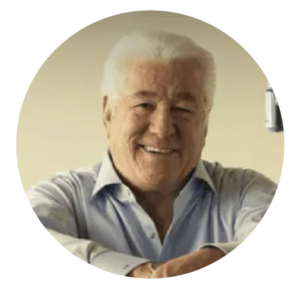
Host:
Cary Hall, America’s Healthcare Advocate


S22 E42 - Cash Pay, A Better Way
Michael Poelman and Ron Rowe join me:
This is a product that is going to make a big difference in a lot of brokers’ lives because employers save, employees save and Doctors get paid immediately!
We’ll talk about WellGuard Assurance’s health benefit product with Apta Cash-Pay. This is a product that is going to make a big difference in a lot of brokers’ lives because employers save, employees save and Doctors get paid immediately! And, If you're a physician or if you're working in a physician's office. You definitely want to take a look at this. Wouldn't you like to get paid in 48 hours? You can do that with Apta cash-pay.
The experts on this show:
Michael Poelman is the founder and president of Apta, and Ron Rowe is the CEO of WellGuard Assurance.
Bonus insider secret: Did you ever want to know how employer healthcare benefits or your own healthcare benefits are created and managed. Check out the 3rd (go to the19:51 mark) segment as Ron Rowe tells all from the inside of the company perspective.
Employers and Brokers, Learn more about all Apta has to offer at https://apta-health.com/ or call (800) 839-7124
And for details about WellGuard Assurance, visit: https://wellguardassurance.com/ or call
This is season 22 episode 42 of America's Healthcare Advocate. I'm Cary Hall.
Cary Hall, America's Healthcare Advocate brings you topics and guests that are relevant to your health, the health of your business, healthcare needs, as well as critical health insurance information.
https://www.americashealthcareadvocate.com/
If you have a service, product or insight related to healthcare, health lives and heathy business, consider partnbering with us: https://www.americashealthcareadvocate.com/sponsors
Listen to this episode
Below are audio podcast players to stream from here on our website. or search for "America's Healthcare Advocate" on your favorite podcast platform.
On Rumble:
Play full audio podcast (above) or find it by clicking from the list below:
iHeart
Episode 2242 transcript:
Announcer And now America's Healthcare Advocate, Cary Hall.
Cary Hall Hello, America. Welcome to America's Healthcare Advocate show. Broadcasting coast to coast across the USA here on the HIA Radio Network. My producers today, Mr. Dave Thiessen, the man who puts all these shows up on our podcast and YouTube platforms, by the way. I think, what is it, 844,000 884,084. We're at 884,000 downloads of the podcast and YouTube.
Cary Hall That's because of all of you in the listening audience. And Garner Cowdrey, our producer on the Cumulus side, puts all these shows together, gets them out across the network for our nationally syndicated radio show. We thank all of you for listening and participating in America's Healthcare Advocate, our website, AmericasHealthcareAdvocate.com. All the shows are up there and on the 16 podcast platforms and the YouTube channel.
Cary Hall Well, today is going to be a unique show. This is something I've wanted to do for some time. Finally, I've got Ron Rowan's studio that made me be recognized by a lot of you here in the Kansas City Metro. Former chief operating officer of Blue Cross Blue Shield of Kansas City and chief revenue officer, former of Blue Cross Center.
Cary Hall Welcome back.
Ron Rowe Thank you, Cary. Good to be here.
Cary Hall It's been a minute. It's been a while and I'm glad to be back.
Cary Hall Especially with what we have to talk about today.
Cary Hall It's going to be great. And Michael Pullman joining me in studio today. He is the president and founder of APTA Health. And you know, this is a unique program. And we're going to we're going to do something today that's very unusual for you that have not understood or don't understand how you can purchase health care with cash-pay.
Cary Hall That's right. Because you can go to any doctor, any hospital in the country. And if you tell them I'm a cash-pay patient, they have to accept it. But how do you do that? Well, we're going to talk about that today. And Michael Pullman is going to tell us how it works. He is partnered with WellGuard Assurance, which is a Detego product and a Detego TPA.
Cary Hall And Ron Rowe is the CEO of WellGuard Assurance and Apta and WellGuard Assurance have partnered together to bring this product to market to get it out there for you as a broker or an employer. Have access to a little bit about Michael. Michael is a healthcare entrepreneur and founder and president of Apta, who has spent three decades working in this.
Cary Hall By the way, it started in 2014, which I found out this morning when you walked in the studio. So this didn't happen overnight, did it?
Michael Pullman No.
Cary Hall it's really quite remarkable. He's also created, as I said, Apta Health, Novo Connection Flagship Services Group with experience spanning benefit plan design, administration, stop loss, health care analytics, care navigation and provider contract and health care payment.
Cary Hall You know, this is completely different, Michael, than basically anything out there. When you say to people, we're going to give you a debit card and it's going to have Apta on it, and it's going to have WellGuard Assurance on it, but it's not going to be the Aetna benefit card or the United Health Care or the Blue Cross card.
Cary Hall It's going to be this card. And people are like oh my God, I don't want that. I need I need my American Express that says Blue Cross or whatever it says. Okay. So this is a different model. Why is this something that people should employers specifically should consider. And definitely something brokers consider. Michael.
Ron Rowe Well I think one of the misconceptions is, is that there is security in that Blue Cross card. There is security with having a network logo on there, and that everybody's got your best interest in mine. The reality is, is our card is actually quite simple. It's got a Mastercard on it. They literally all get a debit card and they're able to use that to pay for health services, and they just identify themselves as self-pay when they go in and allows us to negotiate in advance for things.
Ron Rowe But we pair unlimited access to primary care. And so they get unlimited access to care, work on care journeys, do all of the things. And or we can do virtual or we can do brick and mortar DPC, but that gives them unlimited access to care. To a doctor that they trust that they actually pay on a capitated base.
Ron Rowe They're not owned by the health systems. Right? The other beautiful thing about it is, is that then anything that needs to go outside of that, our care concierge, actually help them load their cards and we actually send them in for a prepaid thing. So there's been reference based pricing and these things that are trying to drive these costs down using non network solutions.
Ron Rowe But when you negotiate everything in advance there's no balance billing and all the noise that happens with the traditional markets.
Cary Hall Ron, you and I talked about this months ago. And I know when you and I initially talked you were like and I was the same way. Like, I don't know about this. Is this really going to work and does it really work? And Rich and Alan, the founders of Detego, I'm one of the three partners that founded Detego.
Cary Hall But Rich and Alan, like this is something we really need to do. And you and I because we come from the world of health insurance. 27 year broker here 30 years for you with Blue. Yeah. You're like this is I don't know. And then then we got involved and you got involved. You came back to me and said, you know what?
Cary Hall I'm explaining this to brokers and they really like it. And employers really like it. So talk about that and this partnership and how it came together. Ron.
Ron Rowe After being with Blue for 30 years.
Ron Rowe And then I came into to WellGuard and I said, we got three products that we sell, and one of them is the Apta cash-pay. And one of our sales folks, John Stockton. You know John very well. John's like, we should lead with this. This is going to change things.
Cary Hall And John's. A. 25 year Aetna guy.
Ron Rowe I'm like, John, I don't know. This is pretty gimmicky to me. I don't I don't know. Well, Michael's sales team, invited me to a finalist presentation with a group up in Des Moines. And I went to that meeting because I wanted to learn more about it. I'm like, okay, so it was a 3:00 meeting.
Michael Pullman We left there at 530.
Cary Hall Holy cow.
Ron Rowe The group. Put his sales team through. How does it work in this situation? They were these this employer was really, really concerned about the experience that the employees were going to have, which makes sense.
Ron Rowe We left there. They had employer said we're going to enroll on Apta Cash-Pay. And I said I think I can get behind this and sell it. I definitely think this is after I've heard all about it and how it works. I'm like, I can see exactly why this is a better model than what I've been doing for 30 years at Blue.
Cary Hall So and that's really what this is. This is a market disruptor. It is something that is going to change. Michael and I were talking before you got here in studio this morning talking about really think this is going to start to change the industry. Because what we're doing now and I don't think you'll argue with this is not sustainable. No, no.
Cary Hall The folks here in Kansas City, I've been contacted by three television stations last two days to talk about “Children's Mercy’s no longer ACA”. You know why? Because it's not sustainable anymore. So we're going to narrow-networks which are making care much more difficult. One of the things about this that's amazing is the accessibility, the fact that you can walk into any doctor's office, you can walk into any clinic, you can walk in any surgical facility here.
Cary Hall I'm cash-pay. So talk a little bit about that, Michael, because you're not restricted here like you are under ACA especially for small group people that are under these ACA small group plans for. Yeah. Well it'll work, but we don't have any. You know, you're out in a rural community. We don't have any we don't have any network out there or any providers that have signed up.
Cary Hall So you're going to have to drive two hours or an hour to get into the city to do this or do that. This program is completely different. Talk about that.
Michael Pullman Well, again, there's the there's the care side of things, which is fascinating because people oftentimes are scared to go to care. And that if it's completely covered and you can have access to it anytime you want, that changes the dynamics. Day one. Right. The other thing is, is that the employer and the member are both paying for that.
Michael Pullman And so they expect that to be aligned with their goals and such, which is exactly what it is. We take them on care journeys. We make sure we're dealing with all their chronic conditions, but not as a bolt on, you know, not as a bolt on solution, but under the care of their doctor. Right. And so this is completely integrated all the way through when anything needs to leave that primary care.
Michael Pullman We have certain specialists that are aligned that they can do things virtually with that are even less cost than the traditional. And they're not geared towards the health systems, the health systems. You know, if you go into a certain place, if you go into an orthopedic specialist, chances of you walking out there with the surgery opportunity is pretty high, right?
Michael Pullman The reality is, is that when you have a baked in second opinion, since somebody independent, you have somebody you can trust that can help guide you through that. On top of that, you are not limited by anything other than the fact that will they accept cash and almost everybody has to do that. Right. So we really have a broader network than anybody.
Michael Pullman And so you have all these people that say, oh, well, obviously we load the card and we make sure that the pricing is reasonable. There could be some unreasonableness out there. But but we always have opportunities to be able to get them to reasonable pricing. And we just load the card and they actually go in and they pay with the plan assets to be able to do that.
Cary Hall And we're going to go to break here at about a minute. I'm going to tease with this before we go to break. This is to the doctors and clinicians out there, the orthopedic surgeons, the general surgical centers, you know, around the country that are listening to this show: Practice medicine, not paperwork. When I come back from the break, I'm gonna have Michael explain what that means and how you can get paid in 48 hours for any procedure you may do or office visit that you may have with a patient.
Cary Hall It's a little different to what you're doing now. Stay tuned. You're listening to America's Healthcare Advocate broadcasting coast to coast across USA here on the HIA Radio Network. If you want to learn more about App to go to this website Apta-health.com. Apta-health.com. You want to learn more, go to the website. Pretty interesting stuff up there.
Cary Hall Stay right there. We'll be right back. You're listening to America's Healthcare Advocate.
Speaker 4 Hello, I'm Cary Hall. You know, I'm 77 years old. And, you know, it's crossed my mind. I don't want to outlive my money. I'm sure you've had that thought, too. How would you like a report card that tells you exactly in an objective way, what your retirement strategy looks like? Are you going to outlive your money? Find out.
Speaker 4 Visit SageonRQ.ai and get your report card today. I'm Cary Hall. Now you know.
Cary Hall Welcome back. You're listening to America's Healthcare Advocate show. Broadcasting coast to coast across the USA. If you heard that first segment, you know what? I'm really kind of interesting that. Go back to the website. All right. It's Apta-health.com Apta-health.com. Also the shows up on all of our podcast platforms, all the YouTube platforms. You can download it.
Cary Hall If you're working in a doctor's office, maybe you're a practice manager, whatever the case may be. That's an opportunity to say, hey, go listen to this. Don't try to regurgitate everything we're saying here because it's like drinking out of a fire hose. But if you do it on the podcast YouTube channel, it's pretty self-explanatory. All right, so I thought this was fascinating.
Cary Hall This morning, I'm sitting there bleary eyed, over half a cup of coffee, trying to figure out my show notes to the show today. And I pick up this flier and I'm going practice medicine, not paperwork. Join the cash-pay network, eliminate claims hassles, and get paid fast. And I'm thinking, what doctor? What clinic? What facility? Wouldn't be thrilled to do this.
Cary Hall And it talks about literally getting paid in 48 hours. Now I have to believe giving the hell that doctors and hospitals and clinics have to go through to submit claims, get pre cert’s. Did it code right? Did it not code right? I was just talking to Dave a minute ago about having a simple physical. And I think he's had eight different EOB’s come out trying to tell him whether what he did in this particular case was right, wrong or indifferent.
Cary Hall This gets rid of all of that. So let's talk to the doctors now and the clinicians and the clinic managers about why this works, how it works. And oh, by the way, you get paid really fast.
Michael Pullman Yeah. The the thing that does kind of a misnomer with the providers and such is that they think they have to go through the insurance to do this and, and really they don't. What we can do is we can connect the employers directly and the plan members directly with the providers. We get rid of all of the middlemen, because what we can do is we can say, hey, we'll code it, we'll bill it, we'll do all of that.
Michael Pullman And it's all under the guidance of the providers. So we don't have these conflicts of interest that always exist. But what we can do is with a QR code, they literally can go in and within about ten minutes sign a contract and upload their fee, their cash-pay rates.
Cary Hall This is the doctor.
Michael Pullman The doctor can their doctor's office. We did it with another specialty unit, this surgical unit this week. That they just they go in there and they just literally can upload their fees or we'll load them for them if they don't have the technical know how. So we can just upload their fees. And then we look at those and make sure that they're priced appropriately for a cash-pay reasonable amount.
Michael Pullman But if you think about it, upwards of 35% is administration chasing down deductibles, coinsurance, all these things, right. And co-pays. And then you have not just that, but you have the burden on the provider themselves. I mean, you can imagine the back and forth they have to deal with that. They don't get paid for. So when you talk about giving them cash, it's immediately they perk up.
Michael Pullman Now health systems have a little different approach. I'm sure they do. Right. But the independent providers are 100% on board every time because they recognize the value of it immediately.
Cary Hall So, Ron, what is it when you when you think about that and you think about how that works, that has to represent a much simpler model to these doctors, these clinicians hospitals. Because let's go back to that deductible, co-insurance, all the rest of it. If if you don't have the money to pay for that, then the hospital or the provider has to go chase the client right, to get that money.
Cary Hall Now we get into collection agencies, remember the old reference based pricing, balanced billing, and that didn't work well at all. This is a completely different model for providers, Ron.
Ron Rowe It's a completely different model. We carry at WellGuard. We kind of act like the insurance company on this. So an employer or an employee of an employer that offers this, WellGuard is standing behind it. We're underwriting it. We're setting the rates because you still it still gets funded like an insurance plan. Correct. That's what WellGuard does.
Ron Rowe 92% of the claims that get paid never come to WellGuard to be processed like an insurance company processes them? They all run through Michael's through through Michael's team on the cash-pay. So the member has no co-pay, no deductible. If they use that card, the provider has no billing. So to Michael's point, the administration costs come, come way down and the money gets spent on the claims.
Ron Rowe And we're and we're, you know, we're taking the risk in. WellGuard like I said, we're funding the claim.
Cary Hall WellGuard Assurance, the plan that’s offering it.
Ron Rowe When they, you know run that card. The funds come out of WellGuard where we're you know, we're treating it like like an insurance plan behind the scenes.
Cary Hall You know, it's funny because I remember back in the day and I have been doing this now for about 28 years as a broker when Pareto rolled out, self-funded and now the largest captive in the country. This is back in the day when they were just starting, there were probably about 200 brokers in the thing and I was one of the first brokers in it, they had they started this concept of Ron just reminded me of it.
Cary Hall No deductible, no copay. If you go to a specific facility. So one of the ones that I really thought was fascinating was Oklahoma Surgical Center. I'm sure you know who they are. The only surgical center that literally puts the price of every procedure they offer on their website. You need a hip replacement. This is what's going to cost. You need you need a knee replacement.
Cary Hall This is what's going to cost. So the argument always with the employer was, well, people aren't going to travel to Oklahoma. Well wait a minute. If they don't have any deductable, and they don't have coinsurance and they don't have to pay the deductable and co-insurance and they just saved $7,000, $8,000, $11,000, whatever it is.
Cary Hall They'll go to Oklahoma. We we learn that they'll go to Oklahoma. Or if they need a liver transplant, they'll go to Shreveport, Louisiana, because the best liver transplant hospital in the country is in Shreveport, Louisiana. So that argument doesn't stand. It's a new day now. Would you agree with that?
Michael Pullman I would totally agree. And let me give you a couple anecdotal stories for that. The first would be I was with actually with To Dinner with Doctor Keith Smith just three weeks ago in Oklahoma City. And we have a complete arrangement with them, so we're excited.
Cary Hall So you work with Oklahoma Surgical?
Michael Pullman Absolutely. We work with everybody. That's that type of a personality. In fact, he helped in the establishment of Smith Medical out of Denver where, I'm in the Parker area. So just southeast of Denver. They have they have a surgical center there. There's one in northern Colorado that we just integrated with this week. So there's a lot of opportunities to do that.
Michael Pullman And they're actually more regional now. There's not you don't have to always just go all the way to Oklahoma.
Cary Hall I'm a dinosaur. This is 20 some years ago.
Michael Pullman So what's beautiful now is, is that we also layer in all of these different cash-pay arrangements so we can play bigger, better. We're completely integrated with all of Tendo Solutions, MDsave. We have other networks that we actually access. And so we can scan all of those as part of our cash-pay network to determine the best price at any location around the country.
Michael Pullman The providers themselves actually are hugely benefited by that. And it's the independent providers that actually are the ones that are the easiest to work with because they recognize this immediately. Let me just tell you this. The Rand Study in 2022 said that the average hospital inpatient-outpatient, was averaging about 254% of Medicare. When you actually take from that percentage the amount that they actually don't collect, because they have to go after billing and everything.
Michael Pullman It's actually about 190% of Medicare. And I can show the math of that. The reality is, is they're not collecting all of that. So they're saying they're getting 254%, but they're still losing out on the deductible, chasing of all that cash down. The interesting thing with ours is we're paying them immediately. They're settled up. And instead of like reference based pricing, which requires still a deductible and out-of-pocket, and all these other health plans have high deductibles, there's no deductible.
Michael Pullman The member experience is transformed and they actually get their care for free.
Cary Hall It's quite remarkable. When we come back from the break. We're going to dive into what does this actually save? Because the current model is not economically sustainable. We talked about that in the first segment. So how do we do this. How does this work and what does this look like from a standpoint of cost to the employer. And does it compromise care to the employee?
Cary Hall We'll come back after the break. We'll talk about that. You're listening to America's Healthcare Advocate Broadcasting here on the HIA Radio Network. Coast to coast across the USA. That website one more time Apta -health.com, apta-health.com. You want to learn more? Go to the website. Pretty interesting stuff up there. Stay right there.
Cary Hall We'll be right back.
Cary Hall Welcome back. You're listening to America's Healthcare Advocate show, broadcast from coast to coast across USA here on the HIA Radio Network. Look, if you need help with anything, the websites AmericasHealthcareAdvocate.com, send me an email. I get a lot of them. I answer each and every one of them, not the same day, but I answer them. So if I can help you, feel free to go to the website, send me an email.
Cary Hall I'll be happy to help you with anything that I can. In studio with me again. Michael Pullman he is the founder and president of Apta, and Ron Rowe, CEO of WellGuard Assurance. We're talking today about this program. It's called Apta. It is very different than anything out there in the marketplace right now. It's been around since 2014.
Cary Hall This is not something that just got invented 2 or 3 weeks ago. It's a it's a program that's been around for quite a while. But what we want to talk now about, and what I'm going to ask Ron to do is talk about what are the economic benefits of this. You heard a few minutes ago when Michael said, 35%, the cost of all the admin that goes into this.
Cary Hall How does that come down in terms of pricing to the broker and to the employer and follow up question. Does that impact the quality of care for the employee? Ron.
Ron Rowe Well, I don't think that's the quality of care for the employee at all. First of all, because that provider is the same provider is going to provide the same care, whether they're getting paid under a Cigna contract or a narrow-network contract or the cash-pay. They’re providing the same care. So I don't think it impacts the care at all.
Ron Rowe Good. That's me. I'll let someone else that's a clinician talk about that though. But I'll talk about the finances behind it. We at WellGuard, we have three products that we sell out of our captive. Three, I should say I'll call them products or networks. The first one is a broad network. We lease the Cigna network.
Ron Rowe It's a traditional PPO. It's what has been in the marketplace for 30 years that the Blues and we call them the BUCAs. Blue, United, Cigna, Aetna. BUCA. That's a typical BUCA product. And then we have narrow-network products where we have providers that have given us deeper discounts than what the BUCA networks are. And then we have cash-pay.
Ron Rowe We bring in a group and we underwrite it. We assess the risk. This is the risk of this group. Then based upon the risk of this group, this is how much we're going to have to charge for a premium, if you will, premium equivalent for this product. That BUCA network, that Cigna network if that's $1,000 rate.
Ron Rowe And we've got many, many employers that are paying $1,000 to have that product.
Cary Hall That's probably on the low end, Ron?
Ron Rowe That's if that's a if that's $1,000 rate, then our narrow-networks are running anywhere from $800 to $850 for the same exact benefit design but a different a lower network. Michael's products were running between $650 to $700. So it's funny he said 35% of it’s administration. We don't really look at that actually. Michael and I joked because we have to charge a little bit of higher admin rate behind the scenes to do some of this.
Ron Rowe But the medical claims are so much lower that a $1,000 product.
Cary Hall $1000 PEPM.
Ron Rowe $1000 benefit design because Michael's product actually sits on a $5,000 deductible plan behind the scenes so that if we got providers out there that say, hey, we're not going to do this cash pair, whatever, those people aren't left without insurance, if you will. Like I said, I, we were talking, I think between the show or 92% of the claims never hit the insurance plan.
Ron Rowe They run through Michael's cash-pay product. So, but that product for the same exact benefit design is $650 to $700 versus $1,000 that you're paying for that Cigna network that we rent. And so, when a broker brings us a group, we show them all three plans. Here's what we have now. We don't have narrow-networks in every marketplace.
Ron Rowe We're just starting regionally. Actually here in Kansas City is our first one. You’re aware of that, but and the employer will have a choice. Do you want Cigna? You want the narrow-network or do you want Apta cash-pay. Half of the groups in our captive today? Half of the groups. And we're young. We don't have a lot of business in there, but half of the groups have Apta cash-pay.
Cary Hall And it's working.
Ron Rowe It's working amazingly well. And if you look at how the plans are performing, Apta’s performing better than the other plans in terms of the cost that we're having to fund for those Health Benefits.
Michael Pullman Let me highlight one thing. He talked about it being about a 30% less than their traditional PPO plan, and we see that consistently on our book of business nationally because we do self-funded for large groups as well. But the thing that you'll also see, and what he didn't mention is, is that that means 92% of the claims went through cash, meaning that the members didn't pay anything for 92% of their claims.
Michael Pullman That's kind of a whole other layer.
Ron Rowe Good point. Really good point.
Michael Pullman And just so you know, we did an analysis. So we were at CYA just recently. And we had a couple of guys who were like, well how's that running. And we have incredible data on this by the way. Show me somebody that can say that they know what every single thing costs the employer does and the member. Nobody has that kind of transparency.
Michael Pullman Right. But on top of that, we have AI. That's amazing. And we typed in and said, hey, let's take a basket of groups that were the PPO plan through our quantum product and, and through our cash-pay program, right. When we compared those, again, it was 25% less on that book. But what was interesting is, is that when you looked at actually the dollars that the members paid out, the average per member was about $1,270 on the PPO plans because they go to high deductibles and all that, right?
Michael Pullman Per member, right under our cash programs is primarily just prescriptions. It was $175. You're talking over $1,000 per member of savings that wasn't mentioned in the savings he's talking about. This is where the employer wins, the member wins and the provider wins. Yeah.
Cary Hall Obviously the providers getting paid within 48 hours, the time the claim comes in.
Michael Pullman They don’t have to chase anything.
Cary Hall And they don't have to bill and go through coding and all the rest of this nonsense, the patient and the employer get a better product at a much lower cost.
Ron Rowe One of the one of the intangibles, too, is that the employers, you know, a lot of these groups that we're talking about, you know, we'specializing in 3 to 100. So they're business owners that are also the HR team and everything else. They don't have the employees running and complaining about the health plan.
Cary Hall That's always the case.