S21 E33 - The BlueKC Mental Health Show
With my guest Ryan Lefebvre Kansas City Royals Broadcaster


Host:
Cary Hall, America’s Healthcare Advocate
S21 E33 - The BlueKC Mental Health Show
With my guest Ryan Lefebvre Kansas City Royals Broadcaster
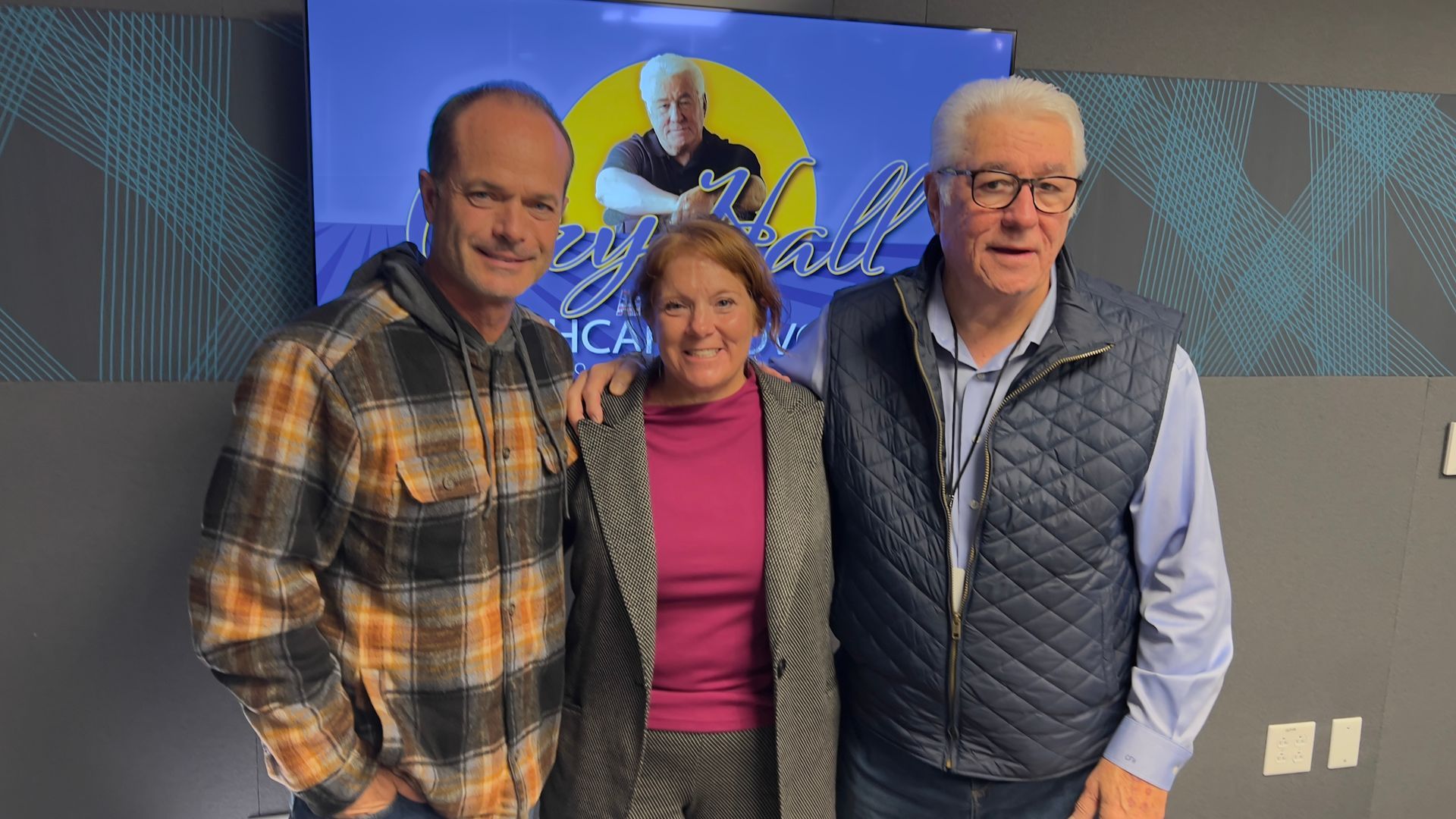
Sportscaster Ryan Lefebvre, the storied broadcaster of the Kansas City Royals baseball team, joins me on this special show along with Kristin Gernon, Blue KC Behavioral Health Program Manager.
Kirstin has over 25 years of experience in the behavioral health field, focusing on children and families. She has been involved in initiatives like the "Shut Out the Stigma" campaign and has spoken on mental health topics, including its importance in youth sports and the new documentary "Not Good Enough".
"Not Good Enough" is available at: https://www.shutoutthestigma.com/documentary
Learn more about Blue KC: https://www.bluekc.com/
And if you need help or have something to share, contact me Cary Hall, America's Healthcare Advocate at https://www.americashealthcareadvocate.com/contact-us
And let me know what's on your mind, issues you are dealing with, or other health, healthcare, and health insurance questions and concerns.
Listen to this episode.
Below are audio podcast players to stream from here on our website. or search for "America's Healthcare Advocate" on your favorite podcast platform.
Watch on Rumble:
Play full audio podcast (above) or find it by clicking from the list below:
iHeart
Episode 2133 Transcript
00;00;00;13 - 00;00;24;23
Cary Hall
We're going to be talking about behavioral health. We're going to have a special guest in studio storied broadcaster for the Kansas City Royals, Ryan Lefebvre. And he'll be joined by Kristen Gernon who is Blue KC's behavioral expert. And we're going to be talking about the program called Shut Out The Stigma. There's an enormous issue in this country that young people, children that are dealing with all kinds of mental health problems that are not being recognized and need treatment.
00;00;25;00 - 00;00;32;07
Cary Hall
This program is going to focus on that. If you have children or grandchildren, you want to listen to this show.
00;00;32;10 - 00;00;36;06
Announcer
And now America's Healthcare Advocate Cary Hall.
00;00;36;07 - 00;00;48;17
Cary Hall
Hello, America. Welcome to America's Healthcare Advocate show broadcasting coast to coast across the USA here on the HIA Radio Network. You can find out more about us by going to the website AmericasHealthcareAdvocate.com
00;00;48;17 - 00;01;11;04
Cary Hall
Also 16 podcast channels and our YouTube channel. 604,000 views. Combination of both. Because of all of you in our audience. Out there that go to the show every week and view it. Our producer today, Mister Dave Thiessen behind the cameras, Garner Cowdry on the boards right here at our home studio and Cumulus in Overland Park, Kansas. Well, this is a special show today.
00;01;11;06 - 00;01;30;00
Cary Hall
The show features Ryan Lefebvre, the storied broadcaster of the Kansas City Royals. 27 years, actually, with the Royals. Welcome back. It's great to have you to see you. And thank you for taking the time to do this anytime. It's great to have you here. And Kristen Gernon, Blue KC Behavioral Health Care Manager. What are we talking about today?
00;01;30;04 - 00;01;53;01
Cary Hall
A program that's been in existence for five years called Shut Out The Stigma. And why are we doing this show? Because this is about behavioral health. It's about mental health. It's about issues that parents, grandparents and adults are dealing with on a day to day basis. And so the idea is to get this out in the public eye, get people to understand it and understand you don't have to be ashamed of it or you don't have to hide it.
00;01;53;07 - 00;02;10;16
Cary Hall
And Ryan is going to talk a lot about that and a book that he wrote. It is about that very thing. So let's just start with Kristin. Can you talk a little bit about this program? It's been in effect for five years now. You've partnered with Ryan and the Kansas City Royals to give some great exposure to this issue.
00;02;10;16 - 00;02;28;08
Cary Hall
And you and I talked about this, you know, before we started the show. It seems to me I've got six grandkids. It seems to me the pressure on these kids today is very, very different. We talked about this Ryan before we started the show. Then it was back when I was a kid, nine, 76 years old. So that goes back away.
00;02;28;10 - 00;02;52;04
Cary Hall
But we you grab a baseball, you grab a basketball, you go ride your bicycle today, it's like, okay, we got soccer practice and we got Girl Scouts and we got choirs. And it's like very, very structured. On top of that is social media and all the pressure that puts on these kids. And then you get into, you know, kids having other issues, acting out, doing things that are completely out of the norm.
00;02;52;06 - 00;03;01;23
Cary Hall
And how does all that fit into this whole issue with behavioral health now? And why is it so critical that it be recognized and dealt with as soon as possible?
00;03;01;25 - 00;03;23;06
Kristin Gernon
Oh, so many important points you brought up. Yes, kids are under more pressure than they've ever been under. We know that on any given day, 1 in 5 U.S. children or adolescents is living with a mental health condition, a diagnosable mental health condition, and some estimates are as high as 80% of individuals will will have a diagnosable mental health condition in their life.
00;03;23;09 - 00;03;42;10
Kristin Gernon
So as we think about our young people and the pressure they're under, it's scheduling. They're they're they're scheduled at every moment of their day between school and homework and activities and activities can be such a great source of positive things. Right. Being a part of a team is such an important thing. There's so many benefits that come to being a part of a team.
00;03;42;12 - 00;04;04;21
Kristin Gernon
The physical side of of sports and exercise is so good for our minds and our bodies, but sometimes it's too much and sometimes there's pressure from the adults in their lives to to perform and to excel at certain things. And what we find is that 70% of kids are dropping out of any kind of organized sports activities by the age of 13.
00;04;04;28 - 00;04;24;27
Kristin Gernon
So at the age of 13, when they might really need to be a part of such a a group, a positive group, like being a part of a team, they're missing out on those opportunities because they've dropped out. And so there are a lot of reasons for that. Some of that is financial and cost, but some of it is the pressure they feel from the coaches and the teachers and the parents, to perform in those moments.
00;04;24;27 - 00;04;26;18
Kristin Gernon
And it feels overwhelming.
00;04;26;21 - 00;04;34;09
Cary Hall
So, Ryan, you've got four kids. Yes, I do. You say before we went on the air that you've got two they're teenagers. Is that.
00;04;34;09 - 00;04;34;16
Ryan Lefebvre
Right?
00;04;34;17 - 00;04;58;00
Cary Hall
I do. Okay. So I'm kind of guessing you're probably seeing a little bit of this yourself. Okay. And you know how these kids know the expectation of performance and all the rest of it is out there? Do you see a difference between when you grew up? Obviously a little later than when I did, but do you see a difference between that and where we're at today, and then how all that fits into what Kristin just said?
00;04;58;03 - 00;05;31;04
Ryan Lefebvre
I do. And at the same time, I heard someone refer to us as were immigrant parents, in that we are the first generation of parents who are trying to navigate our kids through something that we never experienced. This we don't week. I can't tell my kids how I handle social media. I can't tell my kids how I handled the pressures of playing competitive travel sports because I got on my bike after school, like you said, and I biked my way to practice and I biked my way home.
00;05;31;06 - 00;05;52;24
Ryan Lefebvre
And that was it. I practice one day a week when I was their age, and we had games on the weekend, and that was the extent of it. So in that, in that regard, I don't I really can't draw upon my own experience. I'm also the one that really gets me to. And we talk about sports, but also on the academic side and the number of kids that I'm seeing.
00;05;52;24 - 00;06;02;15
Ryan Lefebvre
I have a high school sophomore and I have an eighth grader. Those are my two oldest, and they're already talking about taking classes in high school that have college credits.
00;06;02;15 - 00;06;03;00
Cary Hall
Yeah.
00;06;03;02 - 00;06;34;12
Ryan Lefebvre
Now, I understand the financial side of it. If a family can save a couple of years of college, by getting some of those, you know, general education stuff out of the way in high school, they only need two years of college as opposed to for, like I, I understand that, but the pressure these kids are putting on themselves right now, I mean, three hours of homework and we're trying to tell adults, when your work day is over, you need to go home and just be present with your kids, be present with your families, have dinner together.
00;06;34;17 - 00;06;55;22
Ryan Lefebvre
And yet we are training our kids that after you go to school for 7 or 8 hours a day, that's not enough. You got to take your work home for 2 or 3 more hours, and then you got to weave in a very high pressure sport there. And then we wonder when these kids get into their 20s, in their 30s and they're in the workforce, that they can't turn the motor off because that's that's what we're training them to do.
00;06;55;23 - 00;07;09;25
Ryan Lefebvre
So it's a it's a very it's a very complicated situation. And that we recognize the problem. But nobody wants to step in and say, okay, look that's a we are we are raising our kids to fail mentally and emotionally.
00;07;10;00 - 00;07;12;13
Cary Hall
That's exactly what's going on, is it not? Kristin?
00;07;12;16 - 00;07;22;29
Kristin Gernon
Yes. I think that he brings up so many good points about the pressure that kids are under and how can we support them when we maybe haven't navigated the the new, strange new world that we're in?
00;07;23;04 - 00;07;40;20
Cary Hall
I say I'm the number two pencil in the.com world because I can't even get, you know, I get social media. If it wasn't for Dave Thiessen, there'd be no media or anything else because I don't touch it. Okay? And, you know, when I grew up, we had rotary phones, okay. And what were called party lines, there was none of this.
00;07;40;20 - 00;07;53;19
Cary Hall
So it's impossible to relate to a lot of this in some ways if you haven't done it. And and so you have to at some point, somebody has got to step in and say, whoa, am I right or wrong here?
00;07;53;19 - 00;08;14;05
Kristin Gernon
Yeah, I think you're right. And I think that it starts with, if we can't change all of the elements of this strange new world we're in, how are we checking in with our kids? What are we asking them? What are the questions we're asking them? And are we listening to to them? What are we saying? So, so to to Ryan's point about all the practices and all the activities, let's use that time in the car.
00;08;14;05 - 00;08;29;19
Kristin Gernon
Let's use that time in the car to check in and really have those deep conversations, make sure that they're not on devices in the car. In those short trips, and check in with what's going on. Tell me about tell me about school. Ask some of those open ended questions that get them talking instead of just yes no. How was today?
00;08;29;19 - 00;08;44;10
Kristin Gernon
How was school today? Good? Fine. How can we ask those opening questions? Tell me about it. Who did you play with at recess? What kind of activities did you do right? What do you have coming up? Did anything make you smile today? That anything will make you laugh today? Yeah.
00;08;44;11 - 00;09;08;00
Cary Hall
You know, it's funny you said. I'm thinking back. I'd like at six grandkids, I get a grandson who's 17 years old, and his. How was school day? Okay, good. That's it. So I'll take him out to lunch and sit down with him and start a conversation. Then once I get him rolling, he's talking his head off. But you have to take the time to get them because otherwise they're moving on to something else.
00;09;08;00 - 00;09;14;28
Cary Hall
And then we're almost up here on the break. But how many times do you walk into a restaurant, you see a family, and the kids are sitting here with this.
00;09;15;00 - 00;09;16;00
Ryan Lefebvre
And so are the parents.
00;09;16;00 - 00;09;34;26
Cary Hall
Yeah. Oh, that's the other problem, right. So having dinner together as a family, we always did that. You know, we had dinner every night together as a family. I know both my daughters do it now, but those kinds of interactions with the family are critically important. And unfortunately, I think a lot of that's gone by the wayside. Yeah, we'll be right back after the break.
00;09;34;26 - 00;10;03;22
Cary Hall
You're listening to America's Healthcare Advocate here on the HIV network. You know, if you want to learn more about this, there's a documentary out there that was done Ryan Lefebvre in the documentary Shut Out The Stigma.com/documentary. So you can go watch this. But I come back to the break going to ask Ryan to talk about that. I'm also going to ask him to talk about this book, and I'm going to read a passage out of here that talks about when he started to recognize he had a major problem here and how he went after it, solve it, and change his life.
00;10;03;22 - 00;10;17;29
Cary Hall
Stay tuned. We'll be right back after the break. Here on America's Healthcare Advocate.
00;10;18;02 - 00;10;43;28
Cary Hall
Welcome back. You're listening to America's Healthcare Advocates Show broadcasting coast to coast across the USA. All of these shows are posted. All 16 of our podcasts platform, SoundCloud, Spotify, Cumulus Odyssey. We're on, I think from all of them that are out there, I'm pretty sure. And also on the YouTube channel. And so if you want to tell somebody about this, maybe you're a grandparent, you're seeing this with your grandkids, maybe the parents aren't quite seeing or whatever the case may be.
00;10;44;04 - 00;11;05;12
Cary Hall
Great place to go up to listen to the show or watch the show and learn what we talked about and how it might help you in studio with me today, Ryan Lefebvre, as I said, storied broadcaster, 27 years with Kansas City Royals and Kristen Gernon. He is the behavioral health manager for Blue Cross and Blue Shield. Dealing with the behavioral issues and talking about the program Shut Out The Stigma.
00;11;05;16 - 00;11;24;13
Cary Hall
So Ryan wrote a book some time ago about his whole journey with regard to mental health, depression, all things he dealt with. And I'm going to read this one piece because I think it illustrates something I never would have thought of. And probably you don't think of it either, especially if you see this behavior in children or your children and you don't understand what's going on.
00;11;24;13 - 00;11;42;07
Cary Hall
Let me read you this little piece. So they're in New York City, all right. And he's there with Mike Sweeney. And they have they're going out to dinner and they're going to go see a play called The Producers. So they're gonna go out this really nice Asian restaurant. So here we go. I felt immediately uncomfortable. Five minutes after taking our seats, I was in big trouble.
00;11;42;07 - 00;12;06;24
Cary Hall
I tried to make conversation to distract my own thinking, but the world was slowly caving in on me. I began to sweat while others complained how cold it was. I had my hands folded in my lap between bites, squeezing as hard as I could. Both my legs were in constant twitch. I could feel my heart pounding. There was a warm, tingling sensation in the center of my chest, as if I'd been injected with some sort of burning fluid.
00;12;07;01 - 00;12;30;26
Cary Hall
I started this, it started to spread slowly to my shoulders, down toward my stomach. I thought I was going to pass out. I don't know how it feels to have a heart attack or a seizure, but I thought something horrible was going to happen. I read that the first time I read that, and I thought the physical reaction of being in it, that was a panic attack, said, it's one of your first ones.
00;12;30;29 - 00;12;50;15
Cary Hall
It was graphic. So talk a little bit about that. And then this whole journey as you what you found yourself, you know, where you were. You grew up, your father was a major league baseball player, very successful. Your mother was a flight attendant. You know, you had you had some unusual conditions, and you're in major league clubhouses.
00;12;50;15 - 00;12;55;11
Cary Hall
A lot of other things. And here you are a broadcaster with the Kansas City Royals. You got this perfect life.
00;12;55;13 - 00;12;56;01
Ryan Lefebvre
00;12;56;03 - 00;13;01;10
Cary Hall
And all of a sudden this is starting to happen. It's not so perfect anymore. Ryan.
00;13;01;12 - 00;13;27;18
Ryan Lefebvre
Well that was 20 years ago. And you're reading that and I'm thinking it this 2025 is 20 years since, the bulk of that book was written, which began as a reflection and, journaling, which my mom encouraged me to do. And I'm not a writer by nature. I don't do not usually how I express myself. But when things would happen to me, I would get on my laptop.
00;13;27;18 - 00;13;47;20
Ryan Lefebvre
And that's how I would take these feelings on the inside and and give them, the written word at least. And when I was with my counselor, it was the, you know, the verbal expressing these feelings that were trapped inside of me. And I'm really glad that I did that when I did, because if you were to ask me now, what do I remember about that panic attack?
00;13;47;20 - 00;14;08;07
Ryan Lefebvre
The first panic attack I had at the restaurant, I wouldn't have remembered, because that whole 2005 year was just like a blur for me. So that, I mean, that was that was a very frightening night. I got up from the table eventually, and I went into the bathroom and I thought, well, what do they do in the movies?
00;14;08;07 - 00;14;14;06
Ryan Lefebvre
In a situation like this where you splashed cold water on your face, right? And that that kind of unique bathroom?
00;14;14;06 - 00;14;17;15
Cary Hall
Two if I remember it was it was a waterfall and it was just.
00;14;17;15 - 00;14;31;13
Ryan Lefebvre
Yeah, it was and it just didn't help. And then we went to the movie or we went to the show on Broadway. The Producers, which at the time was the number one show on Broadway, and Mike Sweeney got his connections and we were like, in the third row or something. And I was miserable. And he knew it.
00;14;31;15 - 00;14;53;23
Ryan Lefebvre
And so we had a really good long talk after that. I couldn't sleep at all that night, but, the silver lining of all that was up until that night, the feelings that I had, I felt were just a matter of will or a lack of will, you know, like, you know, I'm a grown man. I mean, as you described, I, I basically had the life that I wanted.
00;14;53;23 - 00;15;11;01
Ryan Lefebvre
I mean, I checked off just about every box before I turned 30 years old in my career. So what is going on? Why am I why am I feeling this way? This is not making any sense. But when I started to have the panic attack and I'm sweating, is when I began to realize maybe there's something physically wrong with me.
00;15;11;01 - 00;15;37;04
Ryan Lefebvre
Maybe this isn't the result of how strong I am on the inside. Maybe there's an an uncontrollable. So when I got back from that trip to New York shortly after that is when I went to a doctor for the first time, and I was prescribed medication for the first time. And, so, like many things in life, the worst thing that happens to us can be a precursor to the best thing that happens to us.
00;15;37;04 - 00;15;59;13
Ryan Lefebvre
And so my recovery went to another level after that, before it was talking with my counselor, which was extremely helpful. The problem was prior to me taking the medication as I would have these great revelations with my counselor and in the 12 minute drive from her office to my house. By the time I walked in the front door, I was feeling miserable again.
00;15;59;13 - 00;16;21;17
Ryan Lefebvre
It just wasn't sticking. It wasn't. It wasn't absorbing into me as a new truth, or at least replacing a lie that I believed about myself. So with the medication did for me as it helped me with my anxiety. I was on Xanax for a while just to take the edge off the anxiety. And then I was on Lexapro, an antidepressant for three and a half years.
00;16;21;20 - 00;16;49;15
Ryan Lefebvre
And after a while, once that once that started to get into my system, my counseling sessions were much more meaningful. And the the revelations I had were, were longer lasting because I was getting through these episodes of of anxiety. And the book, to be honest, I mean, I'm, I'm grateful that I had the opportunity to write the book, but I've always said there's that's it's not a remarkable story.
00;16;49;16 - 00;17;08;09
Ryan Lefebvre
There's no walking on water moment in there. But I realized at the time that I had a unique platform and that if I thought I had the life that I always wanted to have, I'm sure just about every male sports fan would think that this is the life that they wish they could have. So how does this happen to Ryan Lefebvre?
00;17;09;20 - 00;17;33;12
Ryan Lefebvre
And I thought, a story was written about me in the Kansas City Star in the spring of 2006, which eventually led to the book. And I just realized that this was going on all around me. It may not have been manifesting itself like it was in my life, but this is going on all around me. So the the the big purpose of the book, Cary, for me was to just share my story that somebody might be able to read that book and it relates to their story.
00;17;33;14 - 00;17;51;04
Ryan Lefebvre
But the ultimate goal is if somebody reads that book and then they're willing to share their story so that if, Cary Hall reads my book and it means something to him, and then he has a friend who's going through depression now, Cary Hall can use his story to inspire his friend. That was the purpose of the book.
00;17;51;07 - 00;18;09;14
Cary Hall
That was the purpose of the book. And I'll tell you a quick little story. After we did one of these shows a number of years ago, we stood outside on the street talking about the show, and I thanked Ryan for doing the show, and he said do you know what, Cary? I wasn't put here to be a broadcaster. I was put here to help deal with this issue and tell people what they need to do to help themselves and help people in their family.
00;18;09;22 - 00;18;29;19
Cary Hall
I think you just heard that. We'll be right back after the break. You're listening to America's Healthcare Advocate Broadcasting here on the HIA Radio Network, coast to coast across USA. By the way, the name of that documentary is “Not Good Enough”, and you can find it at ShutOutTheStigma.com/documentary. It's: “Not Good Enough”. Stay tuned. We've got more.
00;18;29;19 - 00;18;42;02
Cary Hall
We'll be right back after the break.
00;18;42;04 - 00;19;03;01
Cary Hall
Welcome back. You're listening to America's Healthcare Advocate show broadcasting coast to coast across USA here on the HIA Radio Network. You can find out more about us on the website. AmericasHealthcareAdvocate.com If you have a question, a problem, an issue that I can help you with, please reach out to me. I had the gentleman the other day had a united health care plan, but couldn't get a wheelchair for his son.
00;19;03;03 - 00;19;24;14
Cary Hall
We kind of got in the middle of that and helped him get a wheelchair. So if we can help you, we're happy to do it. Send me an email. AmericasHealthcareAdvocate.com in studio with me, Ryan Lefevre, broadcaster, 27 years with Kansas City Royals and Kristin Gernon. And she is the behavioral health you would think I do radio Behavioral Health Manager for Blue Cross and Blue Shield’s program.
00;19;24;14 - 00;19;43;16
Cary Hall
And by the way, I want to talk briefly here about the Spira Care program and the fact that they incorporate behavioral health at all of these primary care clinics. And that's part of what you oversee and do. And this is a unique set up because most direct primary care clinics don't touch this. This is this is a big program.
00;19;43;16 - 00;20;03;20
Cary Hall
Erin Stuckey, Jenny Housley, Kim White, Christina Lively all the folks at Blue Cross have been behind this for a long, long time to put this program in place. A lot of times I talk about this hometown carrier and what they do well, this is this is exactly what I'm talking about. 5000 kids and teens get served each year in this program.
00;20;03;23 - 00;20;34;05
Cary Hall
And it's a great program throughout the city. They connect with the school systems and others. So that's a little bit about what I'm talking about when I call them the hometown carriers. So we just heard Ryan talk about that whole thing. Like I said, the first time I read that, I was like, I had no idea of the physical manifestation of this. Then I go to my granddaughter, who's eight years old, has significant ADHD that we've been battling for years, and watch this child have what we call the meltdowns, where she just goes completely off the rails.
00;20;34;07 - 00;20;54;24
Cary Hall
Her mother's tenacity is remarkable. And after all of what we've gone through, they finally got her on a series of meds that work, and she's a different child. She's excelling in school. She's a great soccer player. But so what I was seeing was exactly what Ryan was talking about in a different form, was the physical manifestation of what she's going through.
00;20;54;24 - 00;21;11;28
Cary Hall
And she had and, you know, I'm old school friend. When you did that, when you were in Catholic school, you know, if you act like that, the nun was coming down there with the pointer and it was going across your knuckles or your rear. And one of the two, it was none of this. Okay. So, you know, when I saw that, I'm kind of like, well, she needs to be disciplined.
00;21;12;03 - 00;21;30;13
Cary Hall
No, that's not what she needed. But I didn't know that. And now I see this completely different child because somebody, her mother and her father had the forethought and the tenacity to stick with it till they found the solution. So talk about how all that kind of comes together, including for adults, not just children. Like Ryan talked.
00;21;30;13 - 00;21;30;29
Ryan Lefebvre
About.
00;21;31;01 - 00;21;53;10
Kristin Gernon
It’s so important that we do talk about the physical manifestation because it does come out in physical symptoms. Well, you know, with young people especially, you're going to see kiddos who are struggling, maybe with depression or anxiety, having more stomach aches and headaches and being school avoidance. And and it may not come out or they may not be able to articulate I'm feeling anxious or I'm feeling depressed, but it's going to come out in some other way.
00;21;53;10 - 00;22;13;06
Kristin Gernon
So although our bodies tell the story about what's going on in our minds and what we're struggling with and, and I think the important thing to think about when we think about adults over the years, when we aren't talking about it, when we aren't getting the help we need over, over the course of time, that takes a toll on our bodies, takes a toll on our organs, and leads to significant chronic health conditions.
00;22;13;06 - 00;22;31;09
Kristin Gernon
So Spira Care, as you mentioned, is such an important partner. Because they look at us as not just our mind or our body, but both and the the interaction between the two, we know that if we're struggling with our mental health challenges, it's going to impact our physical health. If we're struggling with physical health, it can take a toll on our mental well-being as well.
00;22;31;12 - 00;22;51;02
Kristin Gernon
So you can't separate out the two. They they work closely, hand-in-hand. Ryan's message is so important because it makes it okay and normal for us to talk about this. And I think too many people go through lots of their lives trying to man up or, you know, you know, rub a little dirt in it and, you know, we're going to be a tough guy and we're not going to talk about it.
00;22;51;02 - 00;23;11;11
Kristin Gernon
I can handle we try to think our way through a problem when our brain is what's having a having a difficult time, right. We don't tell people who have asthma to just breathe harder. Right. But but somehow we think as as humans, as adults, we can just think our way through these problems. But there is a physical manifestation when we don't address it, and it takes a toll over time.
00;23;11;18 - 00;23;35;29
Kristin Gernon
And our young people don't have some of the words and the skills to articulate that. So it really comes out as tantrums, or it comes out as stomach aches and headaches and and that school avoidance I mentioned. So, so tuning in to all of that. But when we as adults are talking about it, when we normalize the conversation, when the Royals use their platform for this, it's such a powerful tool, to make it easier for the rest of us to say, yeah, actually that that resonates with me.
00;23;35;29 - 00;23;39;01
Kristin Gernon
I can connect with that message. I'm struggling to.
00;23;39;07 - 00;23;45;12
Cary Hall
Yeah. And I is the idea that you have to recognize the problem before you’re going to solve the problem. Right? Ryan.
00;23;45;14 - 00;24;13;10
Ryan Lefebvre
Yeah. And and you know, when I look back on my recovery, my initial recovery, and people say, you know, do you feel like you're cured from this? And I had never used the word cured. I, I manage it and I continue to manage it. I mean, 20 years later, after, you know, the bulk of what's in my book and when I was at my lowest, I mean, I am who I am today because I continue to manage it, but I, I realize I don't know if it was intuition or I just had the right people in my life at the time.
00;24;13;10 - 00;24;38;03
Ryan Lefebvre
But I had what I called my triangle of recovery. And first of all, I had a I had a counselor, Dale Williamson, who was really good about taking me back to where I began to believe these things about myself. The lies, as she put it, and or began to believe that I wasn't enough. Where did that start? And I was able to get in touch with that.
00;24;38;03 - 00;24;58;02
Ryan Lefebvre
So at least I knew that as a 34 year old at the time, if I feel this about myself, okay, here's where that comes from. When I was four, I went all the way back to when I was four years old. So I've been carrying this for 30 years. But just to be just to be willing to recognize that and replace, as she put it, lies with truth, you know, how do you feel right now?
00;24;58;02 - 00;25;16;08
Ryan Lefebvre
And I would tell her how I'd feel. And you okay, well, is that true? When you look around, what's going on in your life right now? Is that true? No. Okay, well, that's a lie. So let's just identify that. That that's a lie. Okay. In the previous segment, I covered how the medication just kind of helped control my emotions so I could take in this new information.
00;25;16;11 - 00;25;41;21
Ryan Lefebvre
And then I had a life coach, Gary Kuzmic. And the focus of my life coach was, okay, you have all this information on now, how are you going to begin to live your life? And, mental health awareness has been wonderful over the last ten years in particular. But in my opinion, and I'm not a professional in my opinion, I don't think there's enough attention on those three things.
00;25;41;23 - 00;26;05;16
Ryan Lefebvre
When did you begin to feel this way about yourself? What are you going to do about it, and how are you going to live the rest of your life based on the information that you have? And the word that comes with that is accountability? Yeah. And the accountability is okay. Somebody may have done something to me a long time ago, and I was victimized in some way, but I can and I wasn't able to control that.
00;26;05;19 - 00;26;16;25
Ryan Lefebvre
However, I do control whether I want to label myself as a victim or not. And right now, we're starting to get out of it but right now. I think there's an epidemic in our country of being a victim is a good thing.
00;26;16;28 - 00;26;17;20
Cary Hall
Victimology.
00;26;17;22 - 00;26;38;20
Ryan Lefebvre
And people love to say it's okay to not be okay, and that's fine as long as you say it's okay to not be okay for now, because it there is a there is a feeling that if you're not okay, then you can kind of camp there for a while. And there has to be a point where you have to decide, and this is on the person.
00;26;38;22 - 00;26;55;03
Ryan Lefebvre
And I just spoke somewhere and a counselor was just, you know, how do I deal? And I'm trying to get through to this person. And I said, listen, your effectiveness is going to be directly related to how willing the person you're talking to wants to get better, not just feel better. That's the medication problem we have right now.
00;26;55;03 - 00;27;11;10
Ryan Lefebvre
They just want to feel better right now. If you want to get better, and if you want to look at Ryan Lefebvre now, 20 years later, and first, for some reason I look like I've got it together is because I wanted to get better. I was done trying to feel better today or this week or this month. I wanted I wanted to get better.
00;27;11;17 - 00;27;32;05
Ryan Lefebvre
And that's the hard part because that's on us. And these are adult decisions that are on us. We can't blame mom or dad or whomever from 20 years ago anymore. Our adult decisions are ours. And so the moving forward, what am I going to do with this information? How am I going to live my life now? What am I going to watch on TV?
00;27;32;06 - 00;27;53;06
Ryan Lefebvre
How much time am I going to spend on social media? If I'm struggling with a breakup, why am I still listening to our song? Why am I still going out with the guys or the girls from high school and college that usually the the night ends up with the same result as it did, and I go home feeling terrible about my decision, my life decisions or whatever.
00;27;53;09 - 00;28;14;00
Ryan Lefebvre
That then is incumbent upon the adult. This is on you now. They're off the hook. And so for me, at the time, I was willing to go there. I was willing to let go of some things, but I understood that if I was going to get better, I was going to get better. People were going to help me.
00;28;14;00 - 00;28;29;19
Ryan Lefebvre
But that was a choice that I needed to make, and I didn't. Let me say one more thing. When you get on this path, unfortunately, you don't know how long the path is going to be. It might be a year, it might be five years, it might be ten years. But it's it was my choice to get on that path and stay on that path.
00;28;29;19 - 00;28;49;13
Cary Hall
The takeaway from that Kristin, is he made a decision that he had to be accountable to himself for what was going on. And when a lot of people do is what he just talked about. What Ryan just said victimology because it's a very it's what we do in this country now, as opposed to taking responsibility and starting down the road where it's going to make a difference.
00;28;49;13 - 00;28;52;16
Cary Hall
We've got about a minute left. Your thoughts on that? Yeah.
00;28;52;16 - 00;29;13;16
Kristin Gernon
Oh, he made so many important points and I think about this in the context of our kiddos. Right. How can we teach them that early on so they don't have to get to a crisis point later. Right. How do we help them to understand what's going on, connecting their feelings and their thoughts into something, and in and taking that ownership really early on when they don't necessarily understand, what's going on.
00;29;13;16 - 00;29;27;14
Kristin Gernon
Right. But how can we help them, find that accountability early on? Understand with that insight. Now, a lot of times it is adults telling our own stories about what, we've experienced and what we've gone through to hopefully help them to to have some of the tools.
00;29;27;17 - 00;29;43;14
Cary Hall
We'll be right back after the break. You're listening to America's Healthcare Advocate Broadcasting here on the HIA Radio Network, coast to coast across USA. We'll be right back with more. Stay tuned.
00;29;43;16 - 00;30;06;08
Cary Hall
Welcome back. You're listening to America's Healthcare Advocate show broadcasting coast to coast across the USA here on the HIA Radio Network. Again, you can always send me an email if you want to. Shows are posted on the YouTube platform. Podcast platform. 604,000 views. Thanks to all of you out there. It's really quite remarkable. In here you'll see Ryan Lefevre, broadcaster for the Kansas City Royals, and Kristin Gernon.
00;30;06;09 - 00;30;27;19
Cary Hall
She is the Behavioral Health Program Manager for Blue Cross and Blue Shield. Before we switch to baseball. And I promised that we would do a little discussion about baseball, the Royals, what's coming up this season, though? Let's talk about the course available and what what's out there for the public. That Blue Cross Blue Shield of Kansas City is doing to help people across the board deal with this issue?
00;30;27;19 - 00;30;28;11
Cary Hall
Kristin.
00;30;28;14 - 00;30;49;21
Kristin Gernon
So I would encourage all parents and it really just any caregiver interested grown up to go to shutoutthestigma.com. There's a lot of great information about youth sports and mental health and how those intersect and how we can better support our young people so they don't burn out of sports. And so that that we're protecting their mental well-being while they're so busy with all the activities.
00;30;49;21 - 00;31;03;00
Kristin Gernon
That gives you some solutions and talking points parents can use to better engage with their kiddos. But I also encourage you to take a course. We have a free course available to anyone, who goes to the website,
00;31;03;02 - 00;31;08;07
Cary Hall
And you don't have to be a Blue Cross Blue Shield policyholder. You know, this is what I mean by working in the community.
00;31;08;07 - 00;31;33;09
Kristin Gernon
Yeah, that's such a great point. So it's entirely free. Go and watch the documentary. Not good enough. It really highlights this important issue. And then take a course. There's a course that helps you to think more, more about this issue and how we can support our young people. The course is designed for young people to take, for coaches to take, for any caring adult to take, to really dive in deeper to the themes of that documentary, “Not Good Enough” and the pressure that kids are feeling.
00;31;33;11 - 00;31;49;29
Cary Hall
So if you're looking for help, okay, this this is a place you can go. And by the way, if you have a Blue Cross Blue Shield plan that includes Spira Care, you've got care available to you right there in all of the clinics across the city. There's 11 of them. And they have they all have behavioral health there.
00;31;49;29 - 00;32;05;00
Cary Hall
So once again, thank you both for talking about this whole topic today. Now we're going to switch gears. Let's talk a little bit about the Royals this season. What do you think's going to happen next season. Take it Ryan.
00;32;05;02 - 00;32;07;27
Ryan Lefebvre
Well I can tie this into our conversation.
00;32;07;27 - 00;32;10;26
Cary Hall
I can't wait to hear this. Okay.
00;32;10;28 - 00;32;17;09
Ryan Lefebvre
About 25 years ago, at least, Denny Matthews, the 57 year voice of the Royals.
00;32;17;09 - 00;32;17;29
Cary Hall
He’s still on.
00;32;17;29 - 00;32;43;26
Ryan Lefebvre
We've been together for 27 years. We were talking about a team that, had fallen below expectations after a great season the year before. And Denny said something profound, as he often does. But Denny said, you know, I'll bet when a team takes a monumental leap forward one year, I'll bet about 80% of the time, the next year is a year of regression.
00;32;43;28 - 00;32;59;10
Ryan Lefebvre
And then after that, then they really take off. And so, as we as we discuss it further, and the royals took a monumental leap forward in 2024, they won 30 more games than the year before they went to the playoffs. They advanced one round. Nobody was expecting that.
00;32;59;15 - 00;33;00;15
Cary Hall
It was wonderful.
00;33;00;15 - 00;33;19;16
Ryan Lefebvre
It was it was an historical achievement. No team had ever lost 106 games or more one year, and went to the playoffs in the history of the game. That would be a monumental leap forward. So it's only natural for everyone to expect another monumental leap forward. Well, that's not what happened. They took a step backward.
00;33;19;16 - 00;33;43;27
Ryan Lefebvre
They had a winning year, but they didn't go to the playoffs. And what happens? I think just observing what you know, Denny said, and then seeing it with my own eyes over the last 25 years or so. Sometimes, just like in life, things come easy and we don't appreciate what it takes to be successful. And then the next year comes and it's more challenging.
00;33;43;27 - 00;34;02;00
Ryan Lefebvre
And for the Royals, they had more injuries this year than they did the year before. They didn't hit in clutch situations in 2025 like they did in 2024, and suddenly the wins were a lot more difficult to come by than the year before. And so it was it was disappointing. It did not go according to plan.
00;34;02;02 - 00;34;21;00
Ryan Lefebvre
Okay. But just like in life, you have to make a decision. You know, things are not going the way we want. But what are you going to do now? I can tell you, I've seen a lot of Royals teams that went through what the what the 2025 Royals went through, and they are dead and buried. They're 10 or 15 games below 500 noncompetitive and things didn't work out.
00;34;21;02 - 00;34;49;09
Ryan Lefebvre
They pack up their tents and the season is over. They didn't do that. They still had a winning season. Yeah, they were in it until game 159 mathematically or so. So they continued to be competitive. But there were a lot of lessons learned about, you know what winning games is really difficult. And I think they're going to go into 2026 with a greater appreciation of the finer details that go in to winning a baseball game, and that there are many different ways to win a baseball game.
00;34;49;11 - 00;35;09;08
Ryan Lefebvre
So how does that relate to our conversation today? It's the exact same thing. Some years are good years. Some years are tough years. But if we're learning something every year for growing every year and if we’re reflective every year, and we can look at okay things didn't go the way we had planned, but what went wrong? And am I willing to change?
00;35;09;08 - 00;35;26;03
Ryan Lefebvre
Am I willing to do something different in the upcoming year and learn from my mistakes instead of camping in them, as we were talking about in the last segment? So I'm really looking forward to 2026. The question has come up, you know, what are the royals need to be better? They just need to be better. They could use a couple.
00;35;26;03 - 00;35;39;03
Ryan Lefebvre
They could use a couple of players like every other team could use a couple of players. But I think the lessons learned, if it's handled correctly, I think the lessons learned in falling short in 2025 are going to serve them well in 2026.
00;35;39;03 - 00;35;39;17
Cary Hall
Well, you know.
00;35;39;18 - 00;35;53;00
Cary Hall
And they're fun to watch. You've got a man child that I think really connects with these young guys. They got some great leaders on there and Salvi and some of the other guys and yeah, I gotta I'm up to of course, I'm optimistic about them every year.
00;35;53;00 - 00;35;53;19
Ryan Lefebvre
Right.
00;35;53;22 - 00;36;10;04
Cary Hall
But I'm optimistic that they will do well, next year and, and they'll continue to grow. It's, you know, it's not easy. We're small market team. You know, we don't have the payroll the Dodgers do. Right. So we don't have Shoni Otani. Right. And some of those. But, you know, again, for a small market team, I think we do pretty well.
00;36;10;04 - 00;36;12;25
Ryan Lefebvre
Well, if Denny's formula stays true this year.
00;36;12;27 - 00;36;13;14
Cary Hall
Yeah.
00;36;13;16 - 00;36;21;04
Ryan Lefebvre
Monumental leap forward regression. And then as he said and then look out. So hopefully 2026 is a look out year for the rest of the league.
00;36;21;05 - 00;36;38;20
Cary Hall
I really like that. We hope it is the lockout year this year. And we hope that, we enjoy watching them as much as we did last year and even more so, you know, back to the topic today. You know, oftentimes I talk about the hometown carrier, the difference between them and what I call the conglom-o national carriers.
00;36;38;20 - 00;36;53;20
Cary Hall
You heard about that today. The resources they put in. The 5000 kids a year they help. The various organizations, they help in the city. You don't have to be a Blue Cross, Blue shield, client. You don't have to be a member. But you can go up on the website that they've got set up and you can get help.
00;36;53;23 - 00;37;15;06
Cary Hall
You can about counseling and all the rest of it. Those are all things they offer. And if you happen to have one of those Blue Cross and Blue Shield plans with Spira Care, which, by the way, have zero co-pays, you have behavioral health available to you at no cost, additional cost to you. So that's a little bit of why I think it makes a difference to be the hometown carrier versus the not hometown carrier.
00;37;15;09 - 00;37;20;19
Cary Hall
So thank you all for listening today. We greatly appreciate it. Once again, that documentary is:
00;37;20;19 - 00;37;21;01
Kristin Gernon
Not Good Enough.
00;37;21;07 - 00;37;22;12
Cary Hall
And it can be found.
00;37;22;12 - 00;37;25;22
Kristin Gernon
At shutoutthesigma.com/documentary.
00;37;25;22 - 00;37;40;13
Cary Hall
Right. Okay. So there it is. It's available to you. And now I leave you with this thought from Albert Einstein, the one who follows the crowd. They usually to get no further than the crowd. The one who walks alone is likely to find himself in places no one has ever been. Remember, friends, it's a funny thing about life.
00;37;40;13 - 00;37;51;22
Cary Hall
If you refuse to accept anything but the very best. You most often get it. Thank you for listening to America's Healthcare Advocates Show, broadcasting coast to coast across the USA. Goodbye America.