S22 E05 - Meet the Pain Scrambler
What Does it Do? How it Works Without Pain Meds

Host:
Cary Hall, America’s Healthcare Advocate

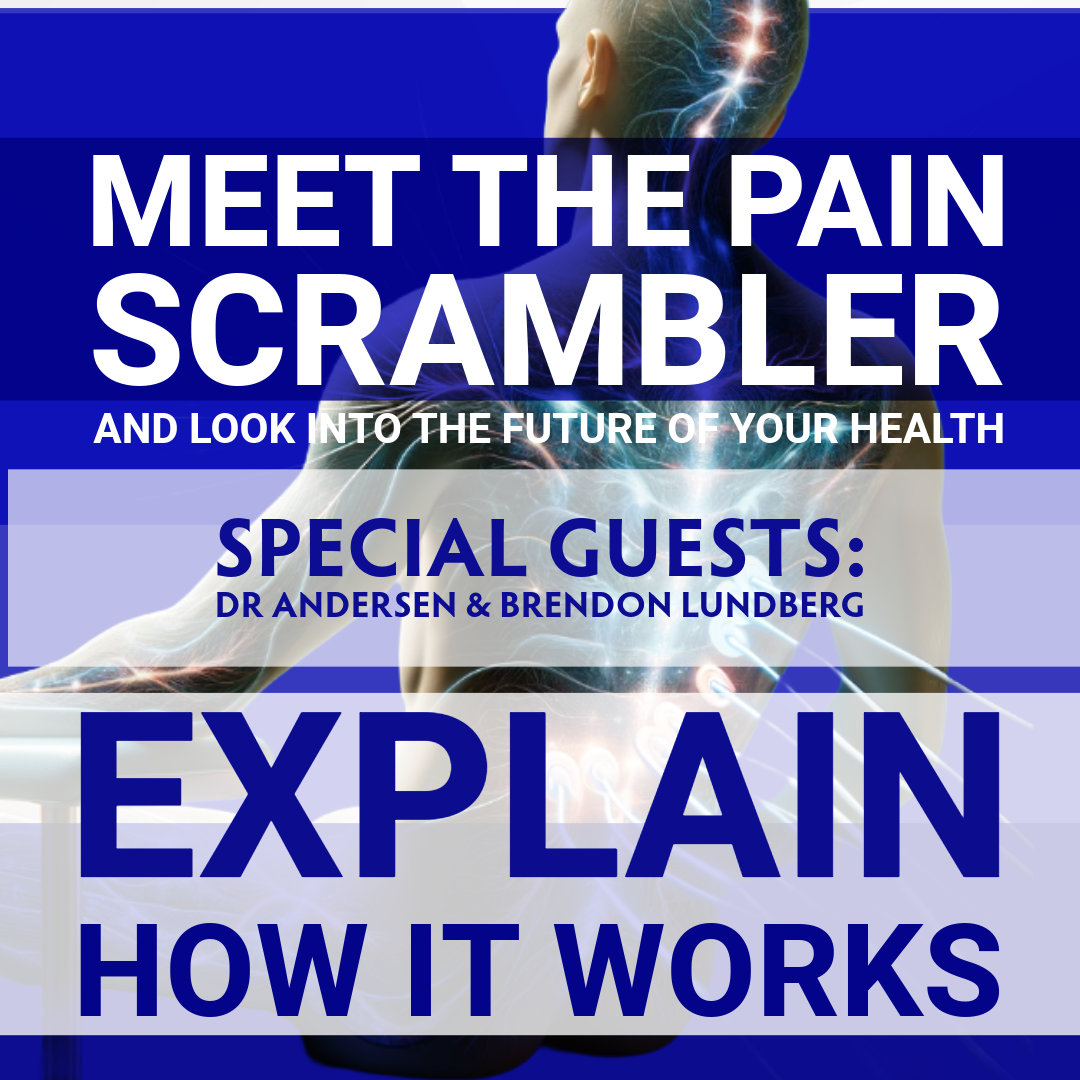
S22 E05 - Meet the Pain Scrambler
What Does it Do? How it Works Without Pain Meds
Today, we discuss all things PAIN. But, in a good way!
Dr. Arden Andersen of Brand New Day Health and Brenden Lundberg, CEO of Radiant Pain Relief, explain everything PAIN and how Scrambler therapy takes the pain level down for their patients from a pain level of 7 or 8, to 4 or 5, and even to ZERO. It uses no pain medication and is non-invasive.
Hear these true stories of chronic pain relief and lives changed.
As Judy R says: "I had severe, life-altering hip pain for 5 years. Generally, my pain level was at an 8 or 9. I came into Brand New Day at a 7 or 8 pain level almost every day to work the Scrambler Therapy". Here is how she reached zero. How she feared the pain would return. But it didn't.
This is one of many fascinating stories we will explore today and find out why so few have even heard of the Scambler.
This is season 22, episode 5 of America's Healthcare Advocate. I'm Cary Hall.
Learn More: https://brandnewdayhealth.com/
As always, if you need help or have something to share, contact me using this form on my website and let me know what's on your mind, the issues you are dealing with, or any other health, healthcare, or health insurance questions or concerns. Visit: https://www.americashealthcareadvocate.com/contact-us
Listen to this episode
Below are audio podcast players to stream from here on our website. or search for "America's Healthcare Advocate" on your favorite podcast platform.
On Rumble:
Play full audio podcast (above) or find it by clicking from the list below:
iHeart
Episode 2205 Transcript:
00;00;09;23 - 00;00;34;28
Dr Andersen
Because somebody pretty much in every family is being inhibited in their life by pain. And so we have an exciting opportunity for people to get out of that pain. Non-invasively, we have a number of technologies. And one of them that we want to talk about today particularly is called Scrambler.
00;00;35;01 - 00;01;05;17
Cary Hall
And now America's Healthcare Advocate Cary Hall. Hello, America. Welcome to America's Healthcare Advocate show broadcasting coast to coast across the USA here on the HIA Radio Network. You can find out more about us by going to our website. AmericasHealthcareAdvocate.com in my producers today, Mr. Dave Thiessen. He's our HIA Radio Producer and does all of the video work that you see up there in our 16 podcast channels and that YouTube channel with now 623,000 views.
00;01;05;17 - 00;01;36;29
Cary Hall
We really appreciate all of you out there downloading the show and listening to it or listening to those podcasts. And Garner Cowdry, he is our Cumulus producer behind the board here. That makes all of this sound the way it's supposed to sound. And we're happy to have them on board today. All right. If you are looking for Obamacare or you're looking for Medicare, your chronologically challenged or you're a 1099 employee, you might want to think about giving Carolee Steele a call over at RPS Benefits by Design 877-385-2224.
00;01;37;05 - 00;02;01;05
Cary Hall
Once again, if your 1099 employee and you're looking for decent health insurance health benefits, they're going to cost less than ACA. Give Carolee a call 877-385- 2224. And on the group side, there's some great benefits out there that Maria Ahlers, who is the president of Benefits by Design, be happy to chat with you about as well. Once again, that phone number 877-385-2224.
00;02;01;11 - 00;02;08;20
Cary Hall
Joining me in studio once again, doctor Arden Andersen. Doctor you're becoming quite a pro at this our 5th or 6th show we've done now?
00;02;08;20 - 00;02;09;11
Dr Andersen
It is.
00;02;09;11 - 00;02;20;11
Cary Hall
Yeah. So we're happy to have you back in studio with us. And the CEO of Radiant Pain Relief, Brendon Lundberg. Welcome to the show, Brendon. Glad to have you here. He’s from Colorado just to do the show today.
00;02;20;12 - 00;02;46;26
Cary Hall
I did, yeah. We greatly appreciate that. My pleasure. You know, we're going to talk about Brand New Day and their website is BrandNewDayHealth.com. This clinic has done more to help people that I've had on this show that are friends of mine, that are people that I know personally, that have gone to this clinic for care and the what they're offering the Neuro20 suit, the Scrambler you're going to hear about today, the red light blue light treatment, all the different things that they're doing there.
00;02;46;29 - 00;03;07;12
Cary Hall
No meds, no surgery, no invasive procedures whatsoever. It is remarkable. I've sent multiple people there. They're friends of mine, colleagues of mine. I've had people on this broadcast. So I urge you, if any of these issues we're going to talk about Parkinson's today. We're going to talk about pain relief today, neuropathy today. We're going to have a whole host of issues to cover.
00;03;07;18 - 00;03;27;24
Cary Hall
This is a great opportunity for you to listen and learn. So doctor, let's just start with you and a little bit about Brand New Day and what's going on now. You know, every time we do one of these, we've got some new technology device or, or some new treatment that we're doing. And, you know, I'm talking to people who are doing it and they're like, I can't believe this.
00;03;28;00 - 00;03;30;21
Cary Hall
It's changed my life. Take it away, doctor.
00;03;30;21 - 00;03;56;18
Dr Andersen
Yes, thank you very much, Carrie, for having us. It certainly is a brand new day. It's an exciting, brand new day. That's just not a play on terms. I mean, it really is. Pain is one of those things that affects most people in the world, really, at some point in time in their life. And unfortunately, it seems to be more and more of a problem as people get older just because of arthritis.
00;03;56;20 - 00;03;59;23
Cary Hall
You say that at age 76. I want to point that out.
00;03;59;23 - 00;04;26;16
Dr Andersen
Yeah, but it's, you know, I mean, it's part of life, really is we have accidents, we have athletic injuries, we have just osteoarthritis. We have diabetes, we have all of those things. And pain, is pretty much a part of every family's life because somebody pretty much in every family is being inhibited in their life by pain.
00;04;26;19 - 00;04;54;29
Dr Andersen
And so we have an exciting opportunity for people to get out of that pain non-invasively. We have a number of technologies, and one of them that we want to talk about today particularly is called Scrambler. And I'll let Brendon explain a little bit more about that when we get to him. But Scrambler is one of those things that really reprograms the brain, because if we're in chronic pain, it's one thing to be in acute pain.
00;04;54;29 - 00;05;17;03
Dr Andersen
You get in an accident, you break your arm or something of that nature, it heals and you're out of pain, right? It's a whole nother thing, though, that you break that arm, it heals. You go to physical therapy and you get your range of motion back, but the pain is still there. And five years later, that pain is still there.
00;05;17;03 - 00;05;42;29
Dr Andersen
Or maybe it's even worse now. So that is really negatively affecting a person's life. And they may have been back to the surgeon. They may have been to another physical therapist, they may have had all kinds of filming done on it, and nothing shows up that invasive technologies will do anything about, gee, go home, have a nice life.
00;05;43;00 - 00;05;44;08
Cary Hall
No. Go home. And here's your.
00;05;44;08 - 00;05;45;19
Dr Andersen
Meds. All right, here's your video.
00;05;45;19 - 00;05;50;12
Cary Hall
Leave that out. Absolutely correct. The solution we get in the medical communities, here's your meds.
00;05;50;13 - 00;06;20;08
Dr Andersen
Absolutely. That's correct. And, well, here's the latest, greatest med on top of the already 2 or 3. The trouble and the problem is, is that that basically makes the patient a zombie. Yep. And that's not acceptable either because that even inhibits their quality of life has been further. So what we found is that that pain chronically has created a pattern in the brain to expect that signal every single day, 24 over seven.
00;06;20;10 - 00;06;47;13
Dr Andersen
And so even if we were to do something locally in that arm for the pain to go away, it's been in the brain for so long, the brain thinks it's still there. And so it still registers as a pain. Perhaps the best analogy I can give is people who have lost a limb. They get what's called phantom pain.
00;06;47;16 - 00;06;53;28
Dr Andersen
Well, the limbs not there anymore. How can you possibly have pain in the hand and the hand's not even there.
00;06;53;29 - 00;06;55;21
Cary Hall
A lot of veterans go through, correct?
00;06;55;22 - 00;07;31;16
Dr Andersen
Yeah. It's because the pain is in the brain, right? That signal that there is a problem here is in the brain. What Scrambler does is help to reprogram, reset the brain to relax. Basically regarding that pain signal and think or understand, if you will, that signal is no longer there creating that pain pattern. And so people that have been in pain chronically, for example, we had a lady come in five years of chronic hip pain.
00;07;31;19 - 00;07;54;02
Dr Andersen
It wasn't an issue that required a hip replacement. She didn't need that. She'd already been released from her physical therapist. She's got all kinds of range of motion. Not a problem there. But she still has this pain, she says to the point of 8 to 9, we use a scale of 0 to 10. Yeah, she's at 8 to 9 every day, which means it completely occupies her life.
00;07;54;05 - 00;08;02;18
Dr Andersen
Three weeks of treatment with the Scrambler. She's a 0 to 3. Depending upon what activities she does. She is happy as a lark.
00;08;02;20 - 00;08;28;13
Cary Hall
It's amazing. It's absolutely amazing. And you know what? What I find even more amazing is that that this is not this is this is not new. This has been around since 2009. You have to ask yourself, where's the medical community been this whole time? And that's why, you know, when we come back in this segment, we're going to talk to Brendon and we're going to talk about the technology, what's gone into this and how they're pioneering across the country.
00;08;28;19 - 00;08;47;04
Cary Hall
But this is what I'm talking about when I talk about alternative methods that can change your life. And they do this at Brand New Day, and they do it every day. And I've got personal experience there, okay. I've got friends that I send there. If you know somebody that's dealing with what Doctor Andersen just talked about, I don't care where you are in the country.
00;08;47;04 - 00;09;03;14
Cary Hall
We have people coming here from all over the country to go to this clinic, go to their website, BrandNewDayHealth.com, BrandNewDayHealth.com. They'll be happy to chat with you. Set up a consultation. Doctor Andersen will talk to you and they'll tell you what they can do for you. And there's a lot more to it than Scrambler.
00;09;03;18 - 00;09;23;29
Cary Hall
There are other technologies we're going to talk about today that they use as well. So we'll get into all that as we've evolved with the show. Stay tuned. You're listening to America's Healthcare Advocate broadcasting here on the HD radio network, coast to coast across USA. Once again, that website, BrandNewDayHealth.com BrandNewDayHealth.com. Stay right there.
00;09;23;29 - 00;09;33;10
Cary Hall
Don't go anywhere. Doctors are in the house.
00;09;33;12 - 00;09;57;13
Cary Hall
You. Welcome back to America's Healthcare Advocate show broadcasting coast to coast across the USA here on the HD radio network. In studio with me, Doctor Arden Anderson and Brendan Lundberg. He is the CEO of Radiant Pain Relief. And now we're going to talk about this technology. You just heard doctor talk about in the last segment. So let's start with this friend.
00;09;57;13 - 00;10;13;27
Cary Hall
And how did this all come about. And and it it's remarkable what it's doing and the people that it's helping. So just talk about the genesis of this is is you shocked me on the break when you said it's been around since 2009. Yeah. And I'm like, why isn't anybody using this? So let's talk.
00;10;13;29 - 00;10;38;00
Speaker 3
Yeah. The Scrambler therapy was FDA cleared in 2009. It's been research at Mayo Clinic, at Johns Hopkins, at MD Anderson. Some very reputable institutions globally. So yeah, and yet it's been lost in obscurity, in part because of economics. I mean, economics drive, you know, like how how people how the providers make money, how the system makes money and scramble therapy falls out of that because of the way it was taken through.
00;10;38;00 - 00;10;56;12
Speaker 3
The FDA was predicated on a Tens unit, which is therapy that's been around since the late 1960s. Right. Doctor Andersen? Yes. And, and yet it's very different this the mechanism of action is quite different. And as outcome is very, very different as well, because it's creating rather than just temporary relief, it's creating more of a lasting or durable you just describe.
00;10;56;12 - 00;11;17;15
Speaker 3
Correct? Yeah. It really goes the fact that is based upon the most modern scientific understanding of pain and chronic pain in particular, which is that it's the brain. We pain is a protective mechanism. Every it's the single greatest human common denominator. Everybody, as you mentioned a minute ago, rich, poor. And every race creed, color experiences pain. Yep. Right.
00;11;17;17 - 00;11;35;21
Speaker 3
And it is actually a protective mechanism. When we have the hand on the hot stove, we've broken an ankle or God forbid, we have cancer growing in our tissue. We actually want to feel pain in those circumstances because it gets our attention. It cuts through the noise of life. It says, hey, something's not right. It encourages us to learn to not touch hot stoves, and it protects us, right.
00;11;35;21 - 00;11;55;20
Speaker 3
And we we seek we seek care because we feel something that's uncomfortable. However, when pain becomes chronic, the brain becomes wired or habituated to expect and petulant pain. As Doctor Andersen said, much like a phantom limb pain. It's not about the tissue anymore. It's about the nervous system becoming wired to expect pain. The tissue is then reacting to that.
00;11;55;22 - 00;12;14;23
Speaker 3
So rather than masking the pain with a drug, which is what, you know, most doctors are prescribing and doing or trying to, you know, inject something or surgically repair or put in a spinal cord stimulator, something that's much more invasive. This technology very calmly, very safely helps retrain the brain back to a more normal perception of pain.
00;12;14;25 - 00;12;41;10
Speaker 3
We're not making people superhuman. We're not taking away their ability to pay, to feel pain. You know, we're not going to have them be crashing through walls and not feeling that pain, but it's going to help them be a more normal pain experience in their body. The way that it does. That. And the reason it's called Scrambler therapy, is based upon a dynamic and changing, i.e scrambled set of artificial nerve impulses that are generated in the device and transmitted through the body via skin surface electrodes.
00;12;41;12 - 00;13;06;00
Speaker 3
We don't place the the electrodes typically on the pain area, but rather around the pain area. And we transmit this information through the nervous system, which the brain receives as kind of an endogenous or a self-generated nerve impulse. And then the second it receives it, it's it's changed scrambled in response to change. So over the course of an hour or so of of treatment session, the brain is flooded with a dynamic and changing set of information which it can't interpret.
00;13;06;00 - 00;13;29;02
Speaker 3
It can't understand it because it keeps changing, but because of that, it wants to know what is this message I'm receiving? Is it safe? Is it information that's important? Is it a threat? It doesn't know because it keeps changing. And so as it as it works in try to interpret that, it starts to reallocate focus or, you know, energy and you know, there's a there's a saying we've probably all heard what, what we fire, we wire.
00;13;29;02 - 00;13;46;25
Speaker 3
Right. It's like it's like it's a habit kind of. And the brain has been in the habit, created these grooves or these myelination that have perpetuated pain as it goes through this process, something called neuroplasticity. The brain can change. And so in the first session, typically we'll see some level of relief. But it's really through a series of sessions over time.
00;13;46;27 - 00;14;07;06
Speaker 3
And it could be 10 or 15. We recommend daily sessions for 2 or 3 weeks. And through that process and through neuroplasticity, the break and go through a restorative process. What also happens because this is a process, not just a one time procedure, but it's a process, is that, you know, the person immediately. Typically night one starts to sleep better, which is hugely restorative to the nervous system.
00;14;07;08 - 00;14;36;06
Speaker 3
Right? I mean, that's most people in chronic pain aren't sleeping well through the night or they're on medications that are you know, artificially helping them sleep. So sleeping improves. Then as that starts to happen, they start to feel better. They start to maybe need their medications that they're on less they can start. We need down titrating off of those, which probably helps them feel better and maybe even most importantly, hope starts to return as they can start to feel better, as they can start to move better, as they can start to have better mental clarity because are not on these medications that are complicating them.
00;14;36;12 - 00;14;46;10
Speaker 3
They can interact in their world with their loved ones, with their kids, with their job, with their hobbies. Hope starts to return, and that becomes a hugely powerful catalyst to helping them continue to improve as well.
00;14;46;10 - 00;15;11;14
Cary Hall
You know. And is that's that's fascinating because, my wife had a heart attack here about a month a half ago. She's been dealing with, heart failure for the last six, seven years. And we had some remarkable news when we went to see our our cardiologist about a week ago. And, and our surgeon, who was going to she was prepared to do their, the surgery.
00;15;11;14 - 00;15;31;18
Cary Hall
They were going to do surgery. They came back and said your ejection fraction rate is at 54. Now you're at the low end of normal. You don't need any of this when you talk about psychological difference. Yeah. She was like like a 16 year old girl. Yeah okay. Because mentally she had hope now that she was going to be able to live a normal life with her.
00;15;31;18 - 00;15;53;14
Cary Hall
Six grandchildren and move forward. So yeah, the psychological I don't think people recognize the psychological completely. The other part of the problem is, and you alluded to this, okay. The reason why I think a lot of this doesn't get adopted is because the pharmaceutical industry and look, I'm not anti pharmaceutical. But let's be clear. There's a hell of a lot of money being made, selling medications.
00;15;53;15 - 00;16;12;06
Cary Hall
That's okay. Yeah. And the doctors are getting paid the medication. The companies are getting paid. The insurance companies are getting paid. Believe it or not. Okay? There's a lot of money flowing here. Yeah. So, you know, eliminating the need for OxyContin and other pain relief medications by using a technology like this, it's a threat.
00;16;12;06 - 00;16;12;23
Speaker 3
To the system.
00;16;12;23 - 00;16;13;21
Cary Hall
Thank you very much.
00;16;13;22 - 00;16;14;02
Speaker 3
It is.
00;16;14;04 - 00;16;30;21
Cary Hall
Okay. And it's out of the box because it's out of the box. It's a threat to the system. Then you're not necessarily going to see it adopted. And that's why, you know what Doctor Andersen and Steve Sanborn have set up at Brand New Day is so very, very different. Yeah. How many other clinics do you have to sit around the country?
00;16;30;22 - 00;16;34;16
Speaker 3
Well, there's there's a handful. You know, I don't know the exact number. I was given the.
00;16;34;23 - 00;16;37;20
Cary Hall
Stock pervasive throughout the country because it's not being adopted.
00;16;37;20 - 00;16;46;26
Speaker 3
Yeah. Well the consumers haven't heard about it because nobody behind it has been able to market it to them in a very broad way. Physicians don't understand it in many cases because they're not trained on this.
00;16;46;27 - 00;16;48;16
Cary Hall
I know, I understand it.
00;16;48;23 - 00;17;08;04
Speaker 3
Maybe I think I think many physicians want to do the right thing, but they also have an economic reality. They have, you know, feed their families and keep the lights on and pay their staff. Of course, they're going to do the things that generate revenue for them, and that's insurance based prescriptive medicine in most cases. Or, you know, injections, even though the injections, the steroid injections, Doctor Andersen can clarify this as a physician.
00;17;08;04 - 00;17;14;08
Speaker 3
But I think the literature is now showing they accelerate the degeneration of the tissue. They're actually making the person worse, even if they're giving some analgesic.
00;17;14;08 - 00;17;20;28
Cary Hall
But you're getting you're getting instantaneous relief. That's going to last a very short period of time when you right back in the box.
00;17;21;00 - 00;17;28;02
Speaker 3
And that's why I think Scrambler therapy is so powerful, because it is a process, again, that becomes empowering to the individual to where they can reclaim their life.
00;17;28;02 - 00;17;50;00
Cary Hall
And that's remarkable. If you want to learn more about this, maybe you're a physician and you'd like to learn about it, go to the website BrandNewDayHealth.com BrandNewDayHealth.com. They'll be happy to reach out to you and chat to you about this. If you're someone that in pain or one of your family members is in pain, or a good friend of yours, please, I urge you to go to this website I've sent lots of people to this clinic.
00;17;50;05 - 00;18;07;27
Cary Hall
It had great results. When I come back from the break, we're going to talk about Parkinson's now, neuropathy and some of the other things that they're treating it. Brand new day. Stay tuned. We'll be right back after the break. You're listening to America's Healthcare Advocate broadcasting here on the HD radio network. Coast to coast, across the USA.
00;18;08;01 - 00;18;21;05
Cary Hall
Stay right there.
00;18;21;08 - 00;18;42;10
Cary Hall
Welcome back. You're listening to America's Healthcare Advocate show, broadcasting coast to coast across the USA here on the high radio network in studio with me today, Brendan Lundberg. He is the CEO of Radiant Pain Relief. And Doctor Arden Anderson from Brand New Day Clinic. And if you want to know more about that and what they do there, that website is BrandNewDayHealth.com.
00;18;42;12 - 00;19;07;10
Cary Hall
So doctor, you know, we've had some pretty remarkable people come on this radio show that you've treated. But I want to start with Parkinson's because this is a disease that, you know, that affects a lot of people. It's being treated with medications. You've got a totally different way of treating this. It's a Neuro20 suit. I happen to have one of these suits and I use it for conditioning and working out.
00;19;07;17 - 00;19;25;16
Cary Hall
But talk about the Neuro20 we had. We brought the suit in studio. We've talked about it. Talk about that. And how this, along with the other treatments that you've got, the light treatments, the scrambled treatment, the effect is having on park space because you've this some of this stuff is just remarkable to me to even hear about.
00;19;25;22 - 00;19;58;07
Dr Andersen
It is actually and it's very exciting. Parkinson's is extremely devastating. And the problem is, is the numbers just keep going up. And so the problem is, is that conventional medicine is only looking at either stem cell therapy a drug or surgery. To address the Parkinson's issue. So essentially really all they're doing is they're looking at how do I address the symptom.
00;19;58;09 - 00;20;28;11
Dr Andersen
And nobody is really looking at well what's the electromagnetic process that's gone awry. So what we find is that if we can wake up that nervous system again, and this is where the neuro soup comes in, because the Neuro20 suit, even though it's on the body, the long and the short of it is it's actually stimulating the central nervous system and back to the brain.
00;20;28;11 - 00;20;59;09
Dr Andersen
Right? Stimulating, brain derived neurotrophic factor, which 20 years ago, we did not believe that brain cells could be regenerated. We thought it was impossible. And, well, there was a few people, Robert Becker, for one, who discovered that it was possible to do that. But nonetheless, conventional medicine. And still today, there's a broad spectrum of opinion that, well, you can't really do too much about it.
00;20;59;12 - 00;21;45;03
Dr Andersen
But what we're finding and there is a clinic now in, Europe that is associated with Steve and us that is following this protocol. And we now have the longest Parkinson's patient on the Neuro20 suit protocol continuing to improve over time. And this clinic is exclusively treating Parkinson's patients successfully. Now, there's a number of things that go into that because Parkinson's is an expression of an overall issue going on in the body.
00;21;45;04 - 00;22;05;21
Dr Andersen
So there's why did they get it to begin with? Yeah. What else may be associated with this? Do they also have some dementia and long term most all Parkinson's patients? Yes, they do. Dementia, yes. Do they have also a cardiac issue going on? Do they have maybe diabetes? So what other chronic illnesses do they have with that?
00;22;05;21 - 00;22;41;25
Dr Andersen
Because we need to address all of those things. And one of the things that Doctor Palermo, who has really pioneered a lot of this as the, medical director regarding their natural 20, is that it's one thing with a disease like Parkinson's to treat it and get improvement. It's another thing to maintain that improvement. And that's where nutrition has to come in to supplementing, particularly brain nutrition in order.
00;22;41;25 - 00;23;22;14
Dr Andersen
So the Neuro20 sued. Stimulating the brain derived neurotrophic factor holds and continues to progress. But we're talking about improving their not only their, strength but their coordination, reducing or eliminating their tremors, getting their personality back. Because one thing that we see with Parkinson's patients as they decline is they get a very flat affect. They get very rattly in their gait, and, and then they.
00;23;22;14 - 00;23;23;11
Cary Hall
Lose the ability to walk.
00;23;23;12 - 00;23;43;22
Dr Andersen
And then they lose the ability to walk, right? Absolutely. They're there. You know, you can see them. They're there, but they're not really there, unfortunately, because the brain's not working like it's close to. So the Neuro20 is making progress in reversing that whole systemic illness.
00;23;43;23 - 00;23;48;06
Cary Hall
So describe the suit I want. People are saying this is like a wetsuit. It looks like a surfers wet.
00;23;48;13 - 00;24;14;07
Dr Andersen
It does. It looks like a wet diver's or a diver suit. And it has pads on the inside of it where it is lined with silver. And so there's also a little bit of an antibacterial component to it just because of silver. It is then by Wi-Fi hooked into a unit that through the computer generates the signals.
00;24;14;07 - 00;24;17;12
Cary Hall
And then the computer's like an Apple computer. I have one that.
00;24;17;12 - 00;24;48;25
Dr Andersen
Is correct on an iPad. Yeah, iPad. And it generates a pulsed signal. And the pulse is the key to getting this brain derived neurotrophic factor to be stimulated in the central nervous system. And so it is unique. It is, cleared through the FDA, correct, as a medical device. So it requires a prescription. It's not like going to body 20 and putting on a unit to gain strength.
00;24;48;25 - 00;25;05;21
Dr Andersen
Yeah. That all it is, is a muscle stimulant unit. This actually is a central nervous system. Stimulate. That's different than stimulating the muscles because it's the brain. It's the central nervous system that we have to change.
00;25;05;21 - 00;25;24;17
Cary Hall
And the computer that you get with the suit, which you set up the therapy after they go through a series of sessions like I did, they can buy the suit, the computer, and they can take it home and you can show them or program for them, correct progressive treatment so they can keep because as you said, with Parkinson's, it's a continual effort.
00;25;24;18 - 00;25;36;07
Cary Hall
Correct. So this is something where someone can actually take the suit I have one, my wife has one. We use it for different reasons. But the point is you can take it and program it to do whatever you needed to do. Can you talk about that a little bit?
00;25;36;12 - 00;26;06;02
Dr Andersen
Yes, that is correct. Well, it depends upon, where you're at and what we see with Parkinson's is that most of these people are exhausted. Oh, because constantly the, the shake right burns a lot of energy. Right. And so with a Parkinson's patient as compared to, say myself or yourself that doesn't have Parkinson's, you have to go much slower.
00;26;06;04 - 00;26;31;13
Dr Andersen
The signal has to be much weaker. We can't have the intensity to it because what happens is, is will blow through their ATP long before we get any therapeutic benefit on that. So that's also why it's vital that we supplement them in order for that therapeutic aspect to be beneficial. So we have to go real slow starting out very slow.
00;26;31;13 - 00;26;59;23
Dr Andersen
And the brain then starts responding positively. So we begin to get additive benefit with each therapy, as opposed to if we go too fast, we then go the opposite way because we, like I said, we just blow out their energy and it doesn't work that way. And so that's just something that has been learned over time. In treating Parkinson's patients, each one is going to be a little bit different as far as what can they tolerate.
00;26;59;25 - 00;27;17;28
Dr Andersen
Because how early are we getting them in the right disease process? For one thing, as well as what kind of diet do they have? What kind of body health do they have? As I said, what other chronic diseases do they have? Because those things also steal, of.
00;27;17;28 - 00;27;18;03
Cary Hall
Course.
00;27;18;04 - 00;27;24;08
Dr Andersen
Attrition from them. So each one really has to be customized and then change as they change as well.
00;27;24;08 - 00;27;43;21
Cary Hall
And that's the beauty of this suit and the beauty of what it can do. It is quite remarkable. And I have seen the results this on people have come into the show. We come back in the next segment. I'm going to ask Doctor Andersen, tell the story of a man who came in from Washington, DC, who had dropped foot, who could not walk without a walker.
00;27;43;24 - 00;28;01;13
Cary Hall
And he walked to the door of this studio and sat in the same chair. The doctor is sitting here right now, and I want him to tell that story about how that suit and his treatment changed his life. We'll be right back after the break. You're listening to America's Healthcare Advocate broadcasting here on the HIA Radio Network.
00;28;01;15 - 00;28;25;06
Cary Hall
I urge you, if you know anybody that's got Parkinson's in your family, in your church, at your place of work, and you want to help them, have them go to the website BrandNewDayHealth.com, BrandNewDayHealth.com. People are coming in here for these treatments from all over the country. This works. I wouldn't have it on the show, and I sure as hell wouldn't endorse if I didn't believe in it.
00;28;25;12 - 00;28;37;13
Cary Hall
So I'm urging you BrandNewDayHealth.com. Stay right there. We'll be right back after the break.
00;28;37;15 - 00;28;57;17
Cary Hall
Welcome back to America's Healthcare Advocates Show, broadcasting coast to coast across the USA here on the HIA Radio Network. I want to give a little shout out to our newest affiliate W, RH, I am and FM 100.1 in Charlotte, North Carolina. We're actually on for two hours every Saturday there. That's pretty remarkable. We thank you very much.
00;28;57;17 - 00;29;24;21
Cary Hall
Very happy to have you on board. Is part of the America's Healthcare Advocate family in studio with me today, Brendan Lundberg. He is the CEO of Radiant Pain Relief, the company that does the Scrambler. We're going to talk a little bit about that and ask him to recap that. And Doctor Arden Anderson from Brand New Day Health, the clinic here in Kansas City, actually in the next to that, provides the services that we're talking about that are very different than what you're seeing from a typical physician.
00;29;24;21 - 00;29;51;07
Cary Hall
So this is all these therapies, they're noninvasive. There are no drugs involved. There are no surgeries involved. It is remarkable what they can do. I know because I've sent many people there and they've had remarkable results. I want you just to recap a little bit about Scrambler again. And this whole pain management thing, because it is a huge issue and is Doctor Andersen said, everybody knows somebody in their family or friends is going through this brand.
00;29;51;08 - 00;30;14;08
Speaker 3
And you're listening and you're dealing with pain, or someone you care about is dealing with pain and is affecting their life. Come to Brand New Day. I mean, this therapy is safe. It's consistently effective. It creates lasting relief. It creates empowerment that individual back into their life. And I spent the last 15 years working with this technology on the clinical care side, as well as on the, you know, the physician education side.
00;30;14;10 - 00;30;26;12
Speaker 3
If you're interested in adopting this into a into a clinical practice, please reach out to us via the Brand New Day website. You know, I'm on it. I think Brand New Day is the only clinic in the Midwest between Chicago and Texas that has this therapy.
00;30;26;12 - 00;30;30;03
Cary Hall
That's amazing. Yeah. So that's what we've got people coming in here from all over the place.
00;30;30;07 - 00;30;41;25
Speaker 3
100%. They're doing amazing things are brand new day. You know, I'm really, really impressed. And, you know, while pain has been where I focus the last 15 years of my life and career and passion, my dad suffers from Parkinson's. So I've been keenly aware.
00;30;41;28 - 00;30;42;28
Cary Hall
Oh, let's say you know this.
00;30;42;28 - 00;30;46;19
Speaker 3
Today, Doctor Andersen's comments. And I can't wait to get my dad hooked up to this.
00;30;46;19 - 00;31;05;20
Cary Hall
I would urge you to do it because I will tell you, I've I've seen the people that have come in and gone to these therapies, and I want to I want to switch to a story now, Doctor Andersen, I'm sure you remember we had a gentleman come here from Washington, DC, and he walked in the studio. He had a little bit of a limp, didn't have a typical normal gait.
00;31;05;22 - 00;31;26;29
Cary Hall
And he sat down and he had had dropped foot. And he told me before the show started that he had been in a walker and could not move without being in that walker until he came to a brand new day. And he came in here and did this radio show. I want you to talk about that and and how you were able to basically eliminate the drop foot.
00;31;26;29 - 00;31;36;04
Cary Hall
He was 90% better when I saw him and he was going to another. We could treat with you. So I'm most curious to hear how he is now. But tell the story.
00;31;36;07 - 00;32;00;28
Dr Andersen
Yeah, that's a very nice story, really. He had a spinal cord injury, post-surgery. Left him with bilateral foot drop. And to the point that he had to wear. Excuse me? He had to wear braces on both ankles and feet to hold his feet from just dropping. And then he had to use either crutches or a walker, to walk.
00;32;00;28 - 00;32;13;17
Dr Andersen
So he was not real ambulatory and particularly for him because he was formerly a, semi-pro or pro soccer player, I.
00;32;13;17 - 00;32;15;11
Cary Hall
Remember that, yes. Yeah.
00;32;15;11 - 00;32;49;00
Dr Andersen
And so very active man. Yeah, extremely. And for him not even to be able to walk normally just devastated him. Well, there was nothing that anybody could do conventionally for him because he had an injury to the spinal cord. He came here, he heard about us and put him in a suit. And even after the second treatment, he had more control of his feet and ankles than he had had prior to surgery.
00;32;49;03 - 00;32;58;11
Dr Andersen
And so he was really excited about it. And it continued to progress to the point where he didn't need the crutches anymore. As you saw him.
00;32;58;15 - 00;32;59;12
Cary Hall
Walked in this.
00;32;59;12 - 00;33;39;06
Dr Andersen
That's correct. That's correct. And he was able to graduate away from having the braces as well. He couldn't run. But he now had some mobility, normal mobility back to of the Allied quality of life to get back to those kinds of things. And so, he continued to progress, through that. Next week and so and then went back, went back home and, so foot drop is one of those things that we are seeing more of actually, because people are getting that information out.
00;33;39;09 - 00;34;03;18
Dr Andersen
We recently had a woman out of state who came to us with several things. One, she had foot drop, but she had foot drop because she had such significant neuropathy and pain that she was losing muscle strength in the legs. And so she was having foot drop because of that loss. Completely disturbing her life. She couldn't sleep well anymore.
00;34;03;18 - 00;34;29;20
Dr Andersen
She was not able to do her, chores around the home. And it was affecting the whole family. As a result. The first thing that we focused on was pain, because we can get to the neuropathy and the foot drop and so on with the Neuro20, but pain was the most important thing that was affecting her life, her sleep and so on.
00;34;29;20 - 00;34;46;08
Dr Andersen
Correct. By the time she left, she was pain free and went back home. And so that helped convince her that, yep, we need to move forward and address, other things. With that.
00;34;46;10 - 00;34;49;07
Cary Hall
And you were using the 20 suit for a lot of this, correct?
00;34;49;07 - 00;34;53;16
Dr Andersen
Correct. But we also added the Scrambler and and.
00;34;53;16 - 00;34;54;12
Cary Hall
The light treatment.
00;34;54;13 - 00;35;22;05
Dr Andersen
The light treatment. There's another therapy as well. We use. But we decided that pain for her was the first thing we had to address in order to improve her quality of life. Correct. Because even if we got rid of the neuropathy, that was not the primary thing. That was a negative in her quality of life. It was the pain that was the issue.
00;35;22;06 - 00;35;26;26
Dr Andersen
Right. And so now she's excited about moving forward and addressing.
00;35;26;26 - 00;35;28;01
Cary Hall
She has a new career, a life.
00;35;28;08 - 00;35;55;05
Dr Andersen
Absolutely. And one thing that I wanted to mention about the Neuro20 as well is that we're stimulating brain derived neurotrophic factor. So it's also beneficial for athletes that have been injured because we can actually put a program in for their running, for their throwing, whatever it is that they're doing to help reprogram the brain to bring back a more coordinated response.
00;35;55;05 - 00;35;56;00
Dr Andersen
Post injury.
00;35;56;00 - 00;36;10;10
Cary Hall
I work, I work out three times a week. I wear that suit every time I workout. It has made a big difference. Made a big difference for my wife who had to drop at the end. Other issues. But thank you both for being here. Thank you for coming in from Colorado. Do the surgery, doctor, as always, is great to have you on.
00;36;10;10 - 00;36;31;07
Cary Hall
Thank you. You know, my closers show out I'm just going to tell you okay. You have to understand. You have to see this to believe it and understand what they can do. I don't care whether it's Parkinson's or it's pain management or it's drop foot or it's neuropathy or it's wound healing. I can go down the list of people I've had on this show and what they've been able to do, and it's remarkable.
00;36;31;09 - 00;36;52;16
Cary Hall
The clinic is BrandNewDayHealth.com BrandNewDayHealth.com. I'm urging you, if you know anybody that is having these kinds of issues, reach out to them. Let come into town. If you live here in the Kansas City Metro, it's easy. But if you're not, if you're from, you know, Mississippi or Alabama, you're from California. Whatever the case may be, reach out to Doctor Ayres and Steve.
00;36;52;19 - 00;37;08;10
Cary Hall
Go through a process where they can tell you what your issues are and what they can do to help you. It may change your life. Thank you for listening to America's Healthcare Advocate Broadcasting here on the HRA Radio Network. Goodbye, America.
00;37;08;13 - 00;37;15;24
Unknown
You can. You.